
Client vs Patient
Modern features of the patient of cosmetology centers
People with certain cosmetic defects or problems quite often do not associate the skin condition with accompanying somatic pathology and/or its treatment. Moreover, to this day, specialists who provide medical cosmetology services use the term "client" in relation to these persons, not patient, from the initially identical concept of "patient" = "patient".
It is common knowledge that the condition of the skin reflects the functioning of various organs and systems of the body: sex hormones (acne, pigmentation, lack of fine or insufficient hair growth, oily or dry skin), thyroid gland (dry skin, hair loss), treatment of other organs of the digestive system (dry skin, pigmentation, allergic reactions, etc.). At the same time, aesthetic changes on the skin may accompany or precede somatic pathology, and the effectiveness of cosmetology procedures and the risk of complications may depend on the activity and severity of the background somatic pathology. That is why medical cosmetic interventions (all injection procedures, laser and other active effects) require a medical approach and assessment of the risk of possible complications and benefits.
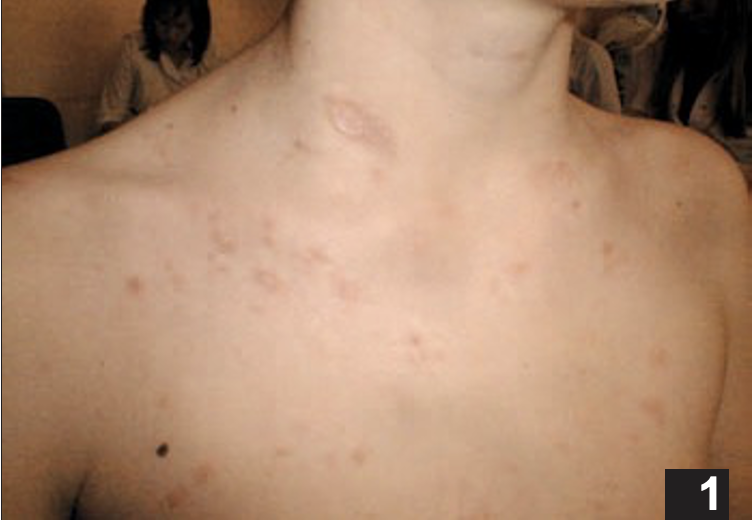
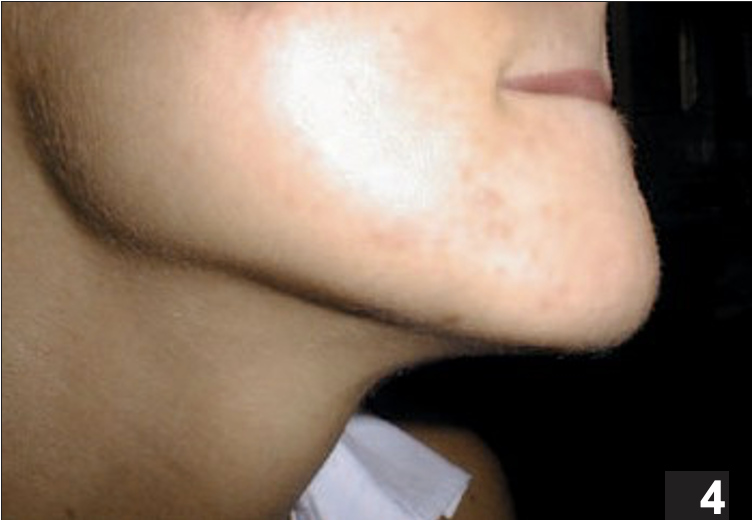
The "alphabet" of the medical approach includes 3 main components: survey (collection and analysis of anamnesis), examination (of every cover, not only the place of the alleged exposure), examination (according to indications, or analysis of previous results according to medical documentation) (photos 1-4).
Zhiber's pink lichen in a 25-year-old patient with postacne who came for a chemical peel. Is it possible to do the procedure on the face?
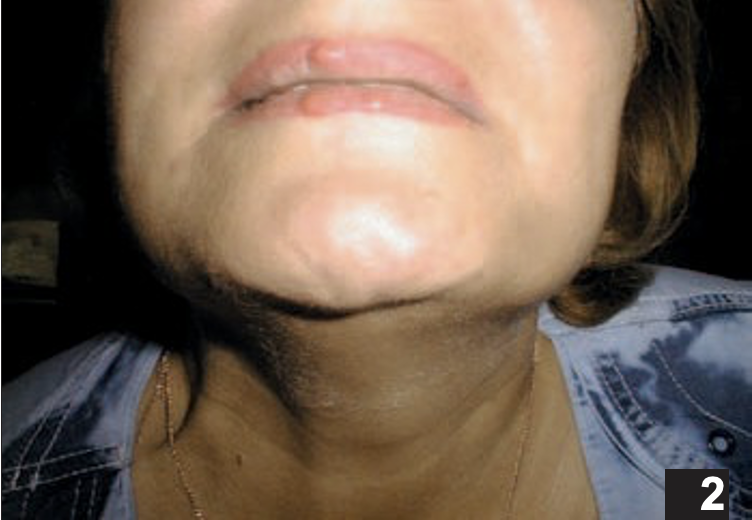
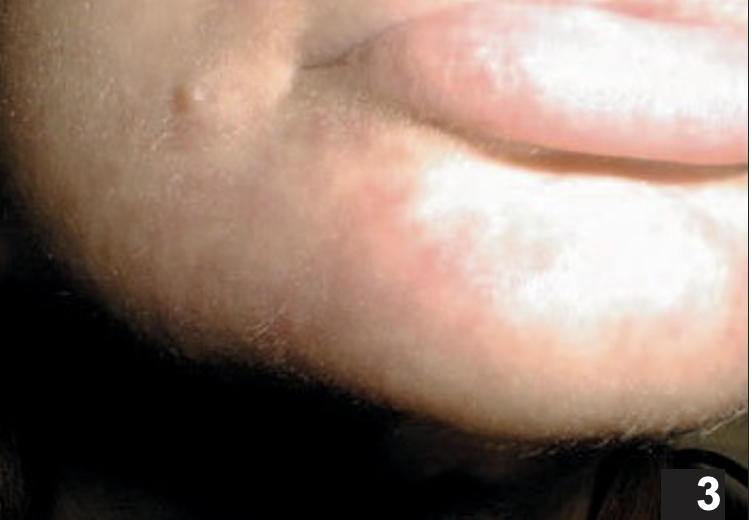
Numerous flat warts that appeared after chemical peeling in a patient with intestinal dysbacteriosis
Neglect of taking an anamnesis and analysis of medical documentation, underestimation of previous diseases and/or inability to analyze anamnestic data can lead to the ineffectiveness of the cosmetic procedure or the risk of complications [1, 2].
We conducted an analysis of clinically significant features of patients of cosmetology medical centers in modern conditions, including the general somatic status of so-called "conditionally healthy persons".
The anamnesis, catamnesis, medical documentation and results of clinical laboratory examination of 168 patients (56 men and 112 women aged 18 to 63 years) who turned to medical cosmetology centers due to aesthetic problems, including acne — 53, hair loss — 59, rosacea — 21, facial pigmentation — 35, were studied.
The questionnaire method was used to assess the level of education (incomplete secondary, secondary, higher), propensity for self-medication, adherence to a healthy lifestyle (balanced diet, frequency of food intake, smoking, alcohol, physical activity), the nature of night sleep. Allergic, including atopic anamnesis, the presence of accompanying somatic pathology, focal otherinfections, frequency of ARVI, etc. Instrumental laboratory methods were used to determine the state of the thyroid gland, pelvic organs, and abdominal cavity.
I would like to draw your attention to the fact that all patients, without exception, considered themselves somatically healthy or had been sick only earlier and did not associate the appearance of aesthetic problems with their general state of health.
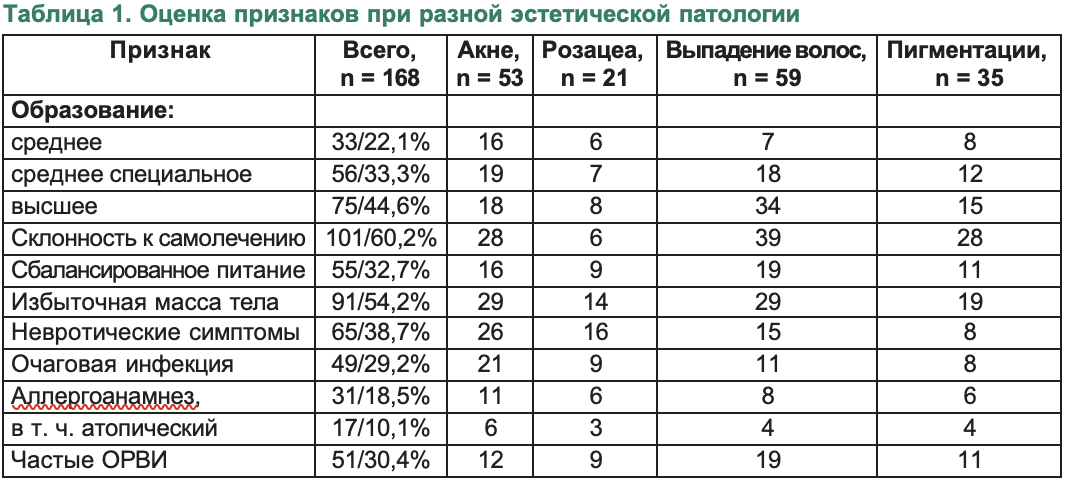
When analyzing the level of education, it was noted that 77.9% patients had a higher, incomplete higher or secondary special education, while the patients themselves chose which specialist they should turn to with the existing problem, and they themselves decided which complaints were related to this problem. Despite the high level of education, more than half of the patients (60.2%) engaged in self-medication for a long time, mainly using biologically active supplements, homeopathic remedies, cosmeceuticals, folk remedies and herbal treatment (table 1). Ignoring these anamnestic factors in case of selective reactive ingredients of cosmetology effect may contribute to the development of adverse reactions due to drug interactions.
Balanced nutrition could be recognized only in 32.7% patients, while examination and assessment of the condition of the skin and its appendages revealed signs of polyhypovitaminosis in the examined patients (dry skin, onychodystrophy, leukonychia, follicular keratosis on the extensor surface of the shoulders, etc.). Perhaps this was one of the risk factors for excess body weight, which was noted in every second examined patient (in 54.2%).
A severe allergy history was revealed in 18.5% examined, including atopic — in 10.1%. In these cases, there should be high vigilance in terms of the risk of developing allergic reactions (local and/or systemic). Frequent acute respiratory infections, herpes, foci of chronic infection, which can increase the risk of complications during invasive procedures, were identified in 59,6% patients.
Among somatic pathologies that require an assessment of the activity and stage of the process before carrying out invasive cosmetic procedures, the high frequency of occurrence of gastrointestinal tract pathology drew attention - in 41.7% patients; organs of the small pelvis — in 38.7%; thyroid gland — in 26.2% (table 2). Invasive cosmetology procedures are expediently carried out either in the stage of remission or during controlled treatment.
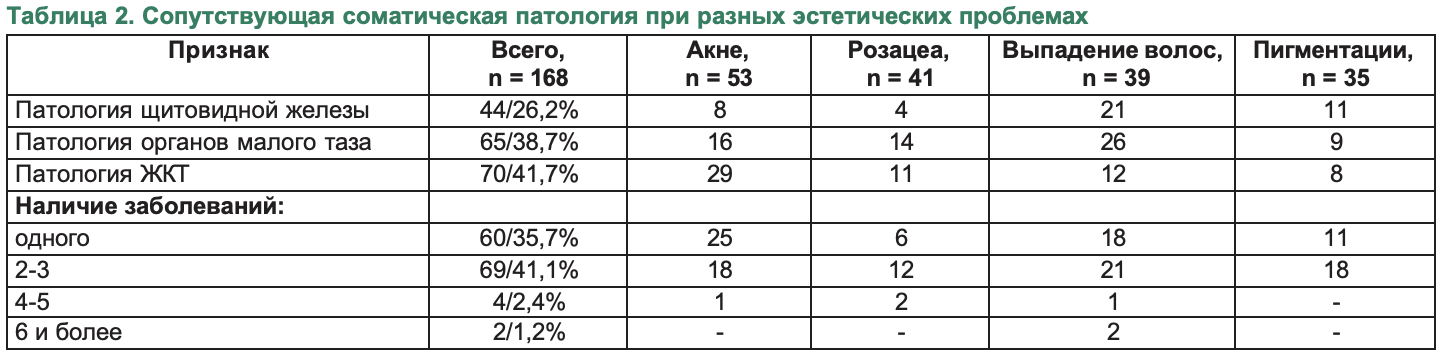
An important feature of the examined patients was the presence of multiple diseases (polymorbidity). At the same time, 23 diseases were observed in the majority of patients (41,1%), with women significantly more often than men, and their number increased with age. Primary chronic diseases, especially those of metabolic dystrophic origin, cause the syndrome of so-called "mutual aggravation" [2], which can affect the effectiveness of cosmetic treatments and increase the risk of unwanted side effects and complications.
Polymorbidity and obuslovlennye etym courses of drug therapy, sometimes excessive, especially when self-medicating, nesbadiet, excess body weight, metabolically dystrophic pathology — all this creates prerequisites for the development of impaired intestinal functioning (dysbiosis, or dysbacteriosis), with subsequent intoxication, a tendency to allergic and pseudoallergic reactions, hypovitaminosis, even with full vitamin therapy.
The "starting" effect when planning and carrying out aesthetic procedures can be a detoxification program using enterosorbents (Greek: enteron - "intestine"; Latin: sorbens - "absorbing") and prebiotics, which selectively stimulate the growth of useful intestinal microflora (bifido and lactobacilli).
Enterosorbents bind and remove from the body exogenous and endogenous toxic compounds, metabolic products, therefore they are indicated not only for the correction of aesthetic problems of the face, but also for the correction of the figure and weight loss programs. Prebiotics, unlike probiotics, do not contain live bacteria and therefore combine well with sorbents, enhancing their therapeutic effects.
The option of choice when carrying out "starting" detoxification can be the combined preparation Eliminal gel, which we have been using in our practice with success for more than two years. Eliminal gel includes a highly active silicon sorbent and prebiotic lactulose, the combined action of which ensures the removal of toxins and metabolic products, eliminates flatulence, normalizes stool and intestinal peristalsis, restores its normal microflora and, due to this, normalizes immunity as a whole and nonspecific resistance of the skin to conditionally pathogenic flora.
In our practice, we use two options for prescribing Eliminal gel: the main course and the preventive course.
The basic course includes daily intake of the drug for 1 joint on an empty stomach, drinking 200 ml of water, 3 times a day for 14 days. Prophylactic treatment — 1 joint on an empty stomach 2 times a day for 10 days, 23 repeated courses with an interval of 1 month. The result of this approach was an improvement in the condition of the skin and the general condition of the person, normalization of stool, regression of intestinal discomfort, prolongation of the effect of cosmetic effects.
Thus, the conducted analysis showed some features of patients of cosmetology centers that must be taken into account in order to achieve long-term effects of aesthetic procedures, reduce the risk of complications and form a successful medical business project.
List of literature
- Gaevsky Yu. G. The problem of training students of medical universities in the principles of diagnosis // Russian Medical Journal. — 2004. — No. 3. — C.1629.
- Kondurtsev V. A. Contemporary patient with a therapeutic profile // Vrachebnye vedomosti. — 2006. — No. 6 — C. 1418.