
Experience with detoxification therapy in patients with various forms of acne
UDC 616.523-002.25-085.26
T.V. Protsenko, O.A. Protsenko,
Donetsk National Medical University named after M. Gorky
Experience of detoxification therapy in patients with various forms of acne
Resume
The purpose of the work is – will study the effectiveness of detoxification in the complex treatment of patients with rosacea, early and late acne.
Material and methods: clinical features and treatment were studied in 76 patients (53 women and 23 men aged 14 to 48 years) with various forms of acne, incl. with rosacea (25 people), early acne (26 people) and late acne (25 people). The detoxification effect was carried out with the help of the combined drug Eliminal gel. The effectiveness of the therapy was assessed by the immediate and distant results of the treatment of patients in two comparison groups: the main group (45 patients), whose complex therapy included Eliminal gel, and the comparison group (31 patients), treated traditionally.
Results. Mild acne was in 34.2%, medium-severe in 44.7%, severe in 21.1% patients, while moderate and severe acne was in 57.7% patients with early acne, in 76% patients with late acne and in 64% patients with rosacea. Demodex was detected in 67,1% patients, including in 84% patients with rosacea, 30.8% patients with early acne and in 88% patients with late acne. Clinical and instrumental examination revealed that 22.4% patients with acne suffered from autoimmune thyroiditis; 21,1% patients with chronic gastritis associated with H. pylori; 66% women with various forms of acne had pelvic organ pathology. Complex therapy for acne with the use of Eliminal gel was well tolerated by everyone and led to a decrease in the general acne load index for early acne - from 64.6±11.4 to 12.4±1.2; with late acne - from 44.2±4.8 to 10.2±1.2; with rosacea - from 38.8±4.1 to 8.1±1.1; achieved stable remission during the year of observation in 57.8% patients of the main group, compared to 22.6% patients treated traditionally.
Conclusions. The inclusion of Eliminal gel in the complex therapy of patients with various forms of acne significantly increases its effectiveness, improves the condition of the skin and ensures long-term and stable clinical remission in 57,8% patients.
Keywords: rosacea, early acne, late acne, treatment, Eliminal gel
Acne and acneiform eruptions represent not only a medical but also a social problem due to its aesthetic component and the defeat of persons of active social and reproductive age. Early acne, starting at puberty, can acquire a chronic relapsing course, with an increase in the intensity of symptoms with inadequate tactics [1, 6, 8]. Late acne and rosacea, debuting in adulthood, are characterized by a longer course and comorbidity with somatic pathology, resistance to therapy and require large financial costs for treatment and rehabilitation [7, 10].
Despite the rather well-studied mechanisms of the development of various forms of acne and the developed unified protocols for the treatment of patients, the issues of increasing the effectiveness of dermatosis therapy, achieving both persistent and long-term remission, and aesthetic results do not lose their relevance [9, 13].
Food factors (milk, high-glycemic products, extractive components, insufficient consumption of fiber, etc.) play a special role in the exacerbation of all forms of acne, which affect the metabolism of each sebum and the pH of the hydrolipid mantle of the skin [1, 2, 13]. It has been proven that disturbances of intestinal microbiocenosis due to irrational nutrition or somatic pathology, especially hormonal dysfunction, and the resulting changes in the ecoscape of the skin with the activation of conditionally pathogenic flora (demodex, etc.) are important factors in the torpidity of the course of acne and the insufficient effectiveness of treatment and aesthetic programs [2, 4]. In the skin, as in a mirror, the processes of impaired functioning of the digestive system are reflected, the clinical manifestations of which are disorders of defecation and constipation, dysbiosis and dysbacteriosis of the intestines, etc. [2, 5, 7, 10]. Taking into account the above, it seems reasonable to include in the treatment program of patients with acne drugs that, along with the effects of detoxification, have the ability to normalize and restore intestinal microflora.
One of the successful preparations of such a choice is the combined medical preparation Eliminal gel, which contains a highly dispersed silicon sorbent (silicon dioxide) and the prebiotic lactulose, which provides sorption and prebiotic effects [2]. Despite the validity of such an approach, to date, only single works have been devoted to assessing the influence of detoxification therapy on the course of various forms of acne.
In connection with this, the goal of the work was to study the effectiveness of Eliminal gel in the complex treatment of patients with various forms of acne.
Materials and research methods
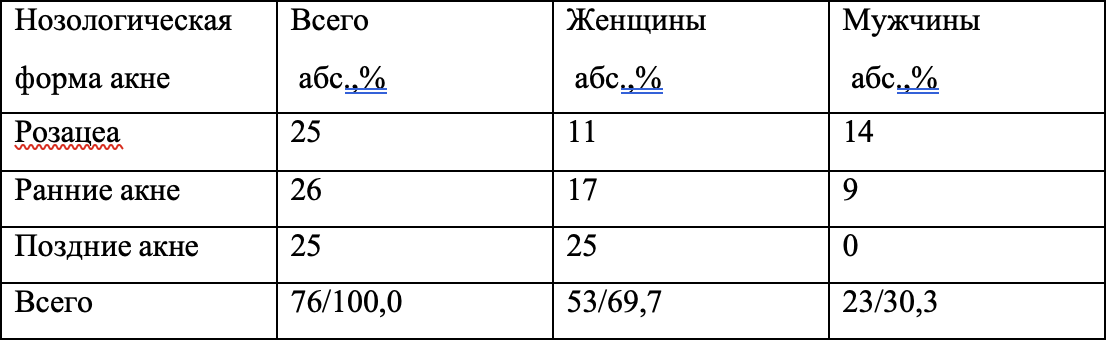
76 patients aged from 14 to 48 were under observation, incl. 23 men and 53 women suffering from rosacea (25 people), early acne (26 people) and late acne (25 people) (Table 1).
Table 1
Distribution of patients by gender and nosological forms of acne
The dermatological examination included determining the condition of the skin of the face, counting the number of inflammatory (papules, pustules) and non-inflammatory elements of the rash (open and closed comedones), followed by the calculation of the index of total acne burden (OUN), determining the severity of the dermatosis (mild, medium-severe, severe), depending on the morphology of the rash, its severity and the area of the lesion.
All patients were examined according to generally accepted recommendations with the determination of a general blood analysis, bilirubin, transaminase, glucose, creatinine, a general urinalysis, ultrasound of the thyroid gland, pelvic organs, and abdominal cavity [1, 5]. The presence of demodex in the contents of the pustules and eyelashes was determined, according to the indications - a breath test for H. pylori.
Inclusion criteria: consent of the patient and/or parents to participate in the study and willingness to follow the doctor's orders, signing the informed consent. Exclusion criteria: severe accompanying somatic pathology in the stage of exacerbation; second dermatological pathology requiring drug therapy; the patient's unwillingness to follow the doctor's recommendations.
The patients were randomly selected into 2 therapeutic groups: the main (45 people), whose complex therapy included Eliminal gel, and the comparison group (31 people), who received only traditional complex therapy in accordance with the type of acne and basic therapy protocols [3, 6]. Both groups were representative in terms of the main compared parameters.
At the first visit, detoxification therapy in the form of Eliminal gel (the main group) and external treatment were prescribed, the choice of drugs of which depended on the type of acne, the features of the morphology of the rash, and the condition of the skin. At the second visit, all patients, depending on the results of the examination, were prescribed systemic therapy and correction of external exposure was carried out.
The justification for the inclusion of the combined medicinal product Eliminal gel in the complex therapy of patients with various forms of acne was the proven detoxification, anti-inflammatory, prebiotic, and immunomodulating effects of its active components and permission for use in practice [TUU No. 15.8-37073142-001:2011].
Eliminal gel was prescribed in the following regimen: 1 stick pack of 2 g per day on an empty stomach, drinking 200 ml of water (1 time after – no eating, but liquid intake is not limited) for 14 days, then repeated 2 courses with an interval of 1 month and 2 prophylactic courses in the same regimen in early spring and late autumn for 1 year.
The effectiveness of the proposed method was evaluated by analyzing the immediate and distant results of treatment (presence and number of relapses during 1 year of observation).
The obtained results were processed by statistical methods using generally accepted programs using a personal computer.
Results and their discussion
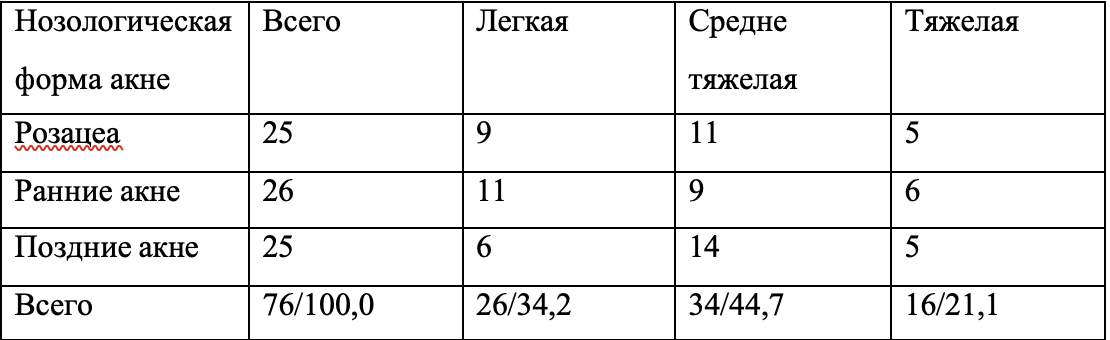
The mild degree of acne was in 26 (34.2%), medium-severe – in 34 (44.7%), severe – in 16 (21.1%) patients (Table 2). It was noteworthy that 15 (57.7%) patients with early acne, 19 (76%) patients with late acne, and 16 (64%) patients with rosacea had moderate and severe acne, i.e. all forms of dermatosis were dominated by patients with severe forms of the disease.
Table 2. Degree of severity of acne with different types of dermatosis
Clinical and laboratory-instrumental examination in the majority of patients with all forms of acne revealed a somatic pathology that is pathogenetically significant for the course of dermatosis, requiring appropriate correction (Table 3).
Table 3. Pathogenetically significant somatic pathology in patients with various forms of acne
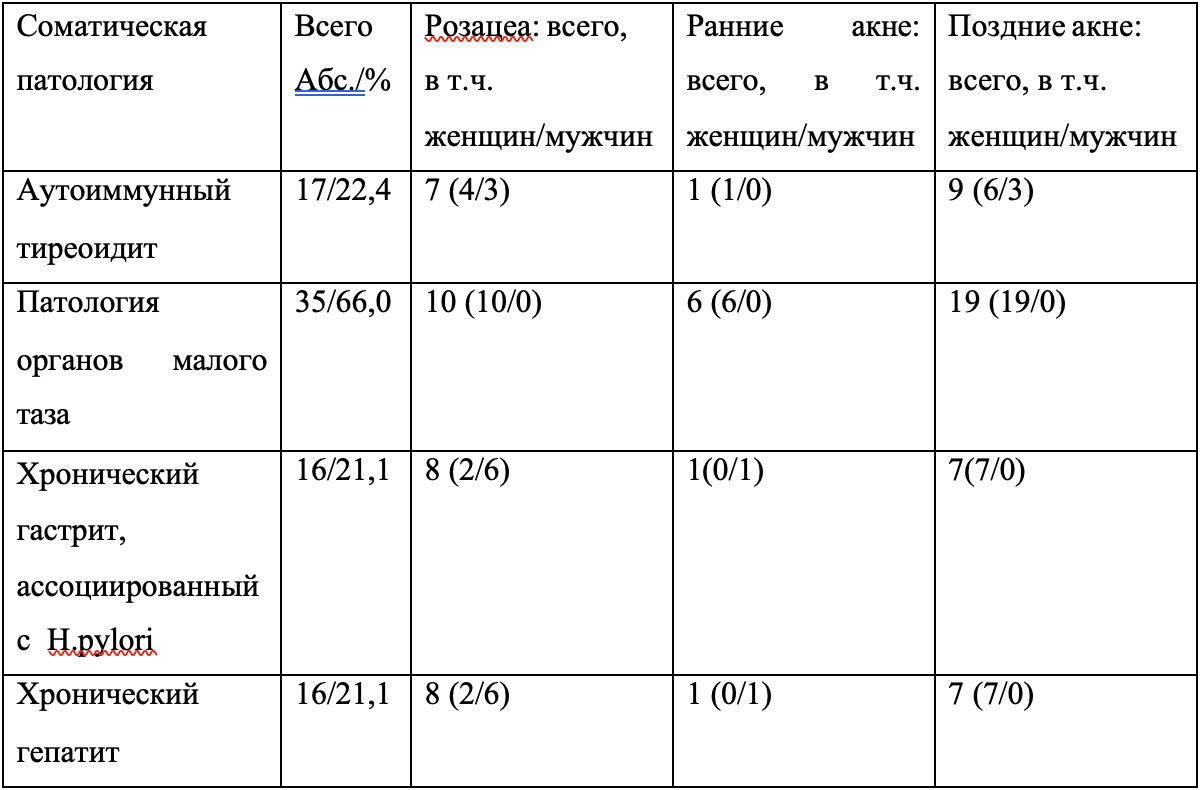
Pathology of the pelvic organs (endometriosis, cystic-transformed ovaries, uterine fibroids, etc.) during examination was found in 35 (66%) women, including in 10 out of 11 patients with rosacea, in 6 out of 17 patients with early acne and in 19 out of 25 patients with late acne. Almost every fifth patient (in 22.4%) was diagnosed with autoimmune thyroiditis, helicobacter-associated gastritis and chronic hepatitis were detected quite often (in 21.1% patients). When analyzing the anamnesis, it was noted that only 18 (23.7%) patients had a daily act of defecation without changes in the nature of fecal masses, equally often with all forms of dermatosis, regardless of age.
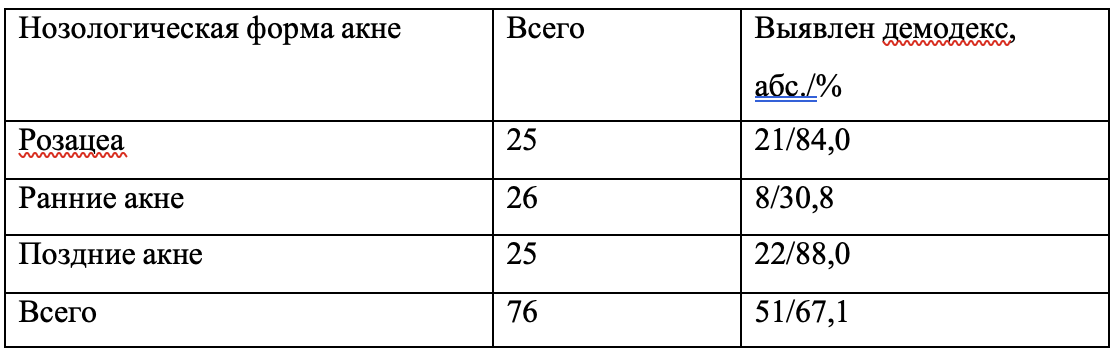
Thus, the results of the anamnesis analysis and complex clinical and laboratory-instrumental examination of patients with various forms of acne testify to the high frequency of diseases or conditions that were "dumb" until the time of the examination, but their continuing course can affect the effectiveness of dermatosis therapy and, what is very important, the durability of the subsequent treatment effect. It is known that these diseases can affect the regulatory systems of the body, the ecoscape of various topographical regions, including skin, intestines, etc. [1]. Indirect confirmation of this was the high detectability of demodex in our observations - in 51 (67.1%), incl. in 21 (84%) patients with rosacea, 8 (30.8%) patients with early acne and in 22 (88%) patients with late acne (Table 4).
Table 4. Demodex detection in various forms of acne
The identified changes served as a justification for starting the therapy of patients with the initial detoxification effect of Eliminal gel, the comfort of which was noted by all patients.
Tolerability of treatment in all patients was satisfactory. All patients of the main group, in contrast to the comparison group, noted an improvement in the condition of the skin at the end of the treatment course, a decrease in the intensity of oiliness and sensitivity of the skin. When analyzing the immediate results of the treatment and assessing the dermatological status, a decrease in the OUN index was noted in all forms of dermatosis, but it was more pronounced in the main group, whose complex therapy included taking Eliminal gel (Table 5).
Table 5. Dynamics of the total acne burden index before and after treatment in comparison groups with different forms of acne
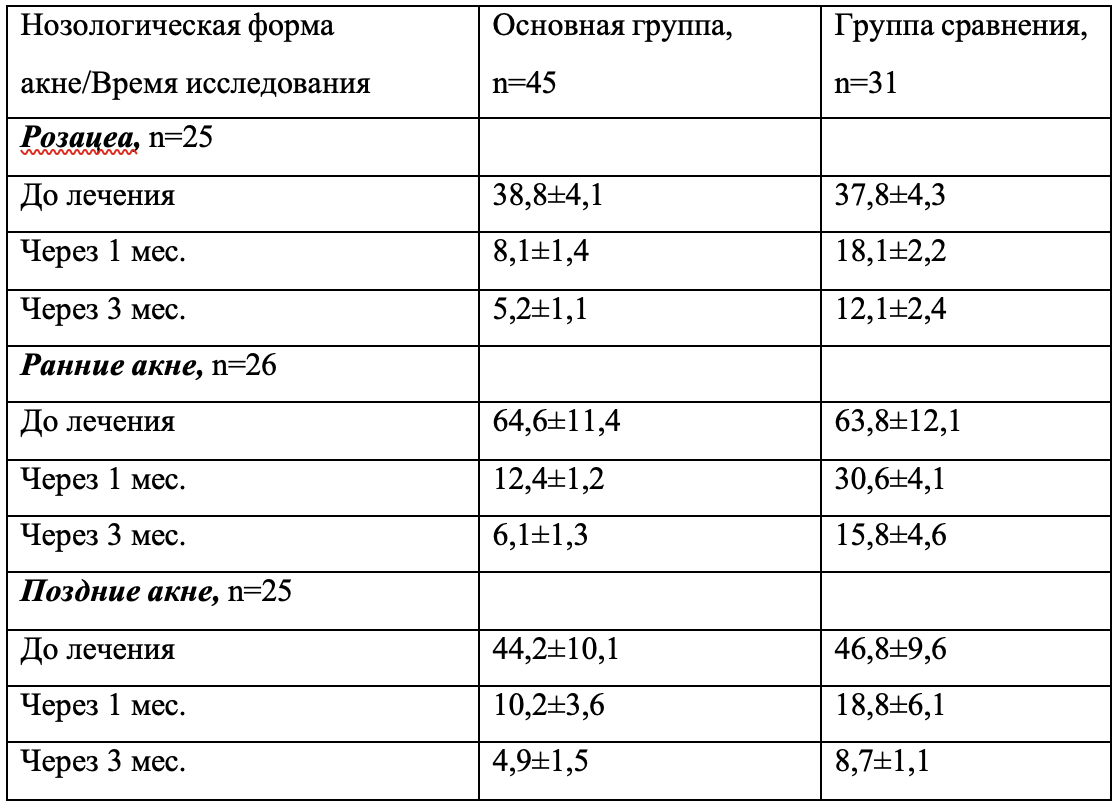
Thus, the decrease in the OUN index in early acne after 1 month was almost 5 times in the main group - from 64.6±11.4 to 12.4±1.2 and only 2 times - in the comparison group - from 63.8±12.4 to 30.6±4.1; with late acne – from 44.2±10.1 to 10.2±3.6 in the main group and only from 46.8±9.6 to 18.8±6.1 in the comparison group; with rosacea - in the main group - from 38.8±4.1 to 8.1±1.4, while in the comparison group - from 37.8±4.3 to 18.1±2.2. Particular attention was drawn to the fact that after 3 months in patients of the main group with all forms of dermatosis, the OUN index was almost 2 times lower than in the comparison group: with early acne – 6.1±1.3 and 15.8±4.6, respectively; with late acne – 4.9±1.5 and 8.7±1.1, respectively; with rosacea – 5.2±1.1 and 12.1±2.4, respectively.
Remote treatment results also confirmed the effectiveness of the developed approach (Table 6). Sustained clinical remission during the year was in 26 (57.8%) patients of the main group and only 7 (22.6%) in the comparison group. 1-2 relapses during the year of observation were in 7 (15.5%) patients of the main group and more than twice as often in the comparison group - in 11 (35.5%).
Table 6. Long-term results of treatment of patients with various forms of acne
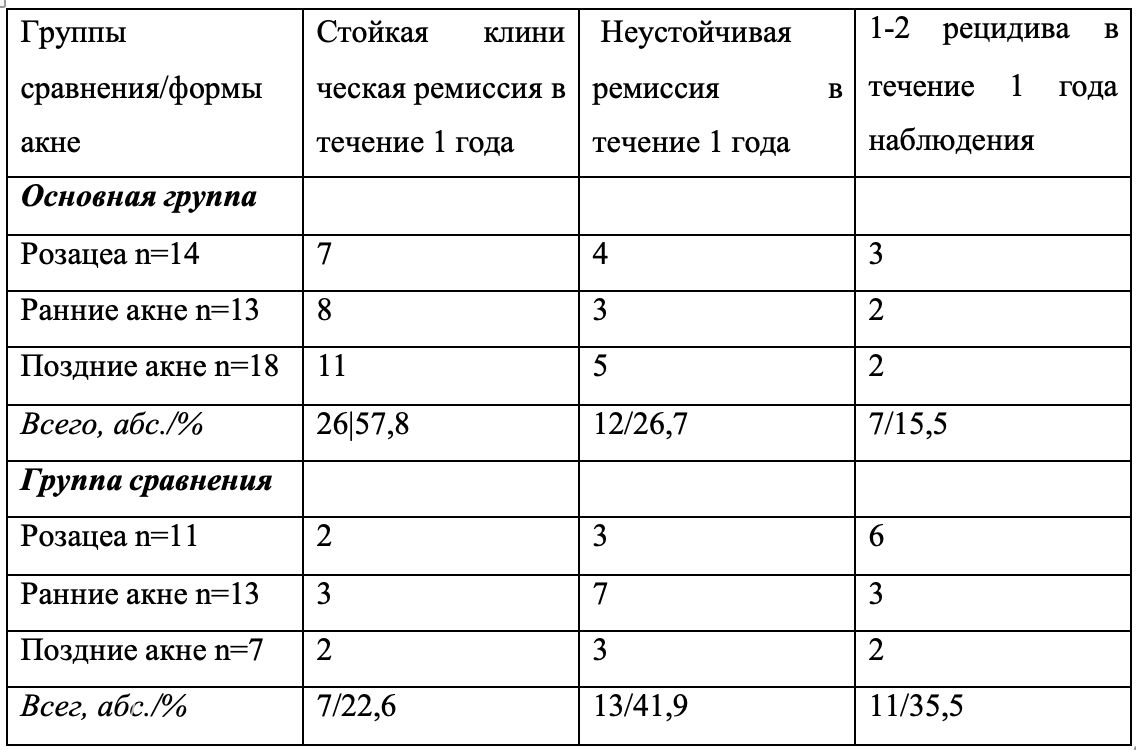
The obtained data once again confirm the thesis about the role of intestinal microbiocenosis in the development and course of dermatological pathology and the importance of detoxification therapy in the staged management of patients.
The combination of silicon dioxide sorbent with lactulose promotes faster intestinal colonization by bifidobacteria and lactobacilli, restores intestinal microbiocenosis, thereby providing and enhancing the range of therapeutic effects (immunomodulatory, anti-inflammatory, antiallergic, etc.). This justifies the expediency of using Eliminal gel in complex therapy of acne and acneiform dermatoses.
Conclusions
- A complex method of treating patients with various forms of acne (early, late, rosacea) has been developed, which consists in including in the basic therapy of dermatosis at the first stage the combined medicinal product Eliminal gel in the following regimen: 1 stick-package of 2 g per day on an empty stomach, drinking 200 ml of water (1 hour after - no food, but liquid intake is not limited) for 14 days, then repeated 2 courses with an interval of 1 month and 2 preventive courses in the same mode in early spring and late autumn for 1 year.
- The inclusion of Eliminal gel in the complex therapy of patients with acne significantly increased the effectiveness of the treatment, was accompanied by an improvement in the aesthetic condition of the skin, a marked decrease in the index of acne burden, both immediately after treatment and after 3 months, contributed to the achievement of long-term and stable clinical remission in 57.8% patients.
- The combined drug Eliminal gel has good tolerability, high efficiency and can be widely used in the treatment of patients with various forms of acne.
Literature.
- Adaskevich V.P. Acne and rosacea. - St. Petersburg: Olga, - 130 p.
- Anokhin V.A., Tyurin Yu.A. The role of the main representatives of the anaerobic intestinal microflora in normality and pathology // Kazan.med.zhurn. – 2001. – Vol. 82, No. 2. - P.149-151.
- Clinical recommendations. Dermatovenerology / Ed. A.A. Kubanova. - M.: DEKS-Press, 2007. - P. 143-153.
- Microecology of the vagina. Correction of microflora in vaginal dysbacteriosis/ Study guide. Ed. V.M. Korshunova et al. M.: VUNMC of the Ministry of Health of the Russian Federation, 1999. – 80 p.
- Murzyna E.A. Justification of ways of correction of the autoflora of the skin of children with atopic dermatitis: Author's reference. thesis ... candidate of medical sciences: 14.01.20. - Kyiv, 2002. - 20 p.
- Project of a unified protocol for the diagnosis and treatment of acne. ICD-10 code: L70-Acne (acne). - Kyiv, 2013. - 9 p.
- Protsenko T.V., Chubar O.V. Khilak in the complex treatment of rosacea // Collection of scientific and practical works. works "Torsuevsky readings". – Issue 2. - Donetsk, 2000. - P.87-90.
- Rational diagnostics and treatment in dermatology and venereology/Edited by I.I. Mavrov. – Kyiv: Zdorovya Ukrainy, 2007. – 344 p.
- Svirshchevskaya E.V., Matushevskaya E.V. New aspects in the pathogenesis and therapy of acne // Contemporary problems of dermatovenerology, immunology and medical cosmetology. – 2011. – No. 2. - 89 - 91 p.
- Chubar O.V. Clinical-pathogenetic justification of new approaches to complex therapy of patients with rosacea: Author's abstract. thesis ... candidate of medical sciences: 14.01.20. - Kharkiv, 2006. - 16 p.
- Barrat H., Hamilton F., Carr G. et al. Outcome measures in acne vulgaris: systemic review//Br.J.Dermatol. - 2009. - Vol. 153. - P. 445-448.
- Kalliomaki M., Salminen S., Arvilommi H., Kero P. et al. Probiotics in primary prevention of atopic diseases: a randomized placebo-controlled trial//Lancet. - 2001. - Vol. 357. - P. 1076-1079.
- KatsambasA.D., LottiT.M. European Handbook of Dermatological Treatments. - Springer-Verlag Berlin Heidelberg, 1999. - 384