+380 32 297 04 06

Antibiotic-associated diarrhea is a special concern

In the zone of personal vnmtsanmya

It is impossible to imagine modern medicine without antibiotics. Along with many indisputable advantages, their use is often accompanied by side effects.

One of the most frequent symptoms is antibiotic-associated diarrhea.

We can talk about AAD if, on the background of taking antibacterial drugs, there are at least three episodes of unformed stool for two or more days. Symptoms of AAD in most patients appear during antibiotic treatment, and in 30% patients - after 1-10 days after its termination.

The frequency of occurrence of AAD depends on the type of prescribed antibiotic and is 2-30%. Despite the fact that almost all antibiotics can cause diarrhea, there are also the most "evil culprits": clindamycin, amoxicillin potentiated with clavulanic acid, ampicillin, erythromycin, clarithromycin (Maev I.V., Samsonov A.A., Golubev N.N., 2007).

It is fundamentally important to distinguish two forms of AAD, which differ significantly not only in the mechanism of development, but also in clinical manifestations, as well as prognosis: idiopathic AAD and diarrhea caused by a microorganismClostridium difficile (pseudomembranous colitis, which makes up 10-20% of all AADs) (Kostyukevich O.I., 2009).

The main and often the only symptom of idiopathic AAD is a watery stool, usually without an increase in body temperature and leukocytosis. Sometimes a violation of the stool is accompanied by a painful abdominal syndrome associated with increased intestinal motility.

One of the main causes of idiopathic AAD is dysbiosis — a change in the quantitative and qualitative composition, as well as the properties of the intestinal microflora. The fact is that when prescribing antibiotics, their influence on the microbiocenosis of the intestine is rarely taken into account, which leads to the suppression of the growth of not only pathogenic microorganisms, but also normal microflora (Duka E.D., Kramarev S.A., 2007).

Dysbiosis leads to a decrease in colonization resistance and active reproduction of microorganisms insensitive to the antibiotic used. The risk of developing dysbacteriosis increases with long-term antibacterial therapy (more than 10 days), frequent use of antibiotics, as well as with the use of low-quality drugs or the wrong mode of their administration.

DIFFICULTIES OF THERAPY

In most cases, the diarrhea stops on its own after the withdrawal of the "culpable" drug. However, sometimes additional treatment is required. If the main mechanism of diarrhea is a change in microflora, doctors prescribe pre- and probiotics. At the same time, correction of dysbiosis in AAD often does not have the desired effect, which is due to the low survival rate of bacteria in the composition of probiotics. The fact is that lactobacillus and bifidobacteria introduced with the help of probiotics die under the influence of toxins produced by conditionally pathogenic flora. Clinical and experimental studies have shown that under the action of gastric juice and bile, probiotics lose up to 90% their activity before they enter the intestines. In addition, it takes 7-8 hours for bifidobacteria to get out of anabiosis, and 5 hours for lactobacilli, so it is obvious that in conditions of diarrhea, they simply do not have time to stay in the intestines. And finally, fungi of the genus are a frequent cause of dysbiosis and AADCandida, and probiotics practically do not have an antagonistic effect on these microorganisms.

As a result, long-term treatment, the need to use different additional drugs, the chronicity of the process, and the increase in the cost of therapy.

FOR TREATMENT AND PREVENTION

An effective alternative to probiotics for AAD is the use of combined preparations containing silicon sorbents in combination with the natural prebiotic lactulose. Highly active silicon sorbents have successfully proven themselves in the elimination of gastrointestinal disorders (diarrhea, bloating, heaviness, nausea), they have a pronounced sorption effect, effectively inhibit the growth and development of pathogenic and conditionally pathogenic microflora, in particular, they show high sensitivity to fungi of the genus Candida. In turn, the natural prebiotic lactulose promotes colonization of the intestine with bifidobacteria and lactobacilli, activates the processes of growth and restoration of the intestinal protective microflora.

Such preparations in the form of a gel can be prescribed both for the treatment of AAD and dysbiosis, and for their prevention from the first days of antibiotic therapy. In addition, in order to prevent AAD, antibiotics should be used only according to indications, antibacterial therapy should be stopped in a timely manner after achieving a clinical effect, and the drug should be immediately canceled if diarrhea and other symptoms appear.

In their practice, doctors often do not pay due attention to the undesirable effects of antibacterial drugs. Meanwhile, antibiotic therapy often leads to the development of dysbiosis, one of the most frequent clinical manifestations of which is antibiotic-associated diarrhea (AAD).

DOUBLE PROTECTION

Eliminal gel is an innovative drug created for the effective and rapid restoration of intestinal microflora for the purpose of prevention and treatment of dysbiosis and AAD. The drug contains a highly active silicon sorbent in combination with the natural prebiotic lactulose. Thanks to the double formula, Eliminal gel has a targeted effect on the removal of harmful bacteria and enterotoxins, and also restores intestinal microbiocenosis, stimulating the growth and development of normal flora.

On the one hand, silicon sorbent adsorbs and removes from the body bacterial enterotoxins, allergens, toxic products that are formed in the process of rotting and fermentation in the intestine. In addition, it has a mediated bacteriostatic and bactericidal effect against kpathogenic and conditionally pathogenic bacteria, as well as fungi of the genus Candida.

On the other hand, the natural prebiotic lactulose promotes rapid colonization of the intestine with bifido-lactobacteria, increasing their quantity by 30-50%, activates the processes of growth and restoration of its own protective microflora. Lactulose changes the pH factor of the intestines to the acidic side, which contributes to the suppression of the growth of pathogenic and conditionally pathogenic bacteria, as well as the optimal action of digestive enzymes. Due to the formation of short-chain fatty acids, lactulose provides protection and regeneration of the intestinal mucosa, restores the permeability of the intestinal wall damaged by enterotoxins.

Eliminal gel is taken 2-3 stick packs per day for 7-10 days.

It is not recommended for patients with phenylketonuria, gastric ulcer and duodenal ulcer exacerbation, gastric or intestinal bleeding, intestinal obstruction.

WHY ELIMINAL GEL?

Among the advantages of Eliminal gel, we can highlight: fast and effective colonization of beneficial bacteria, stimulation of their growth and development; effective normalization of parietal intestinal digestion, elimination of diarrhea, flatulence; economic benefits due to the rapid elimination of symptoms of dysbiosis and intestinal disorders; convenient shape in stick-packages for a single intake and a pleasant barberry taste.

Stepped enterosorption as an optimal method for correcting intestinal microbiocenosis in patients with allergic dermatoses.

UDC 616.521-053.2.085+615.454.1

STEPPED ENTEROSORPTION AS AN OPTIMAL METHOD OF CORRECTION OF INTESTINAL MICROBIOCENOSE IN PATIENTS WITH ALLERGODERMATOSES

Y.F. Kutasevich, I.A. Oleynyk, S.K. Joraeva, V.Yu. Mangusheva

State University "Institute of Dermatology and Venereology of the National Academy of Medical Sciences of Ukraine"

Resume. IN article are given data at therapeutic efficiency stepwisethat of enterosorption with the use of atoxyl and eliminal gel in patients with allergic dermatoses, taking into account the study of the general condition, subjective and objective complaints, and intestinal microbiocenosis before and after the therapy.

Keywords: Allergodermatosis, intestinal microflora, dysbacteriosis, graded enterosorption.

INTRODUCTION

According to WHO data, allergic diseases (AD) take third place in the world after cardiovascular and oncological pathologies. In Ukraine, the prevalence of AZ also continues to increase, especially among the population of industrially developed regions. [1].

One of the causes of AZ is considered to be a greater antigenic load on the body due to the combined effect of natural and anthropogenic factors, in particular man-made pollutants.

In addition to exogenous factors, researchers also identify endogenous risk factors for the development of hypersensitivity of the body, primarily burdened heredity. It is known that 40 % people have a hereditary tendency to atopy, and this contingent of the population is particularly sensitive to adverse environmental conditions. Over time, these individuals develop AZ with an elevated level of IgE, i.e. atopic AZ. Often there is a combined effect of several factors on the body: an unfavorable environmental situation, professional values, social conditions, etc., which primarily affects patients with a hereditary predisposition. [12].

A significant role in the formation of allergies is played by accompanying diseases of the liver, kidneys, digestive tract, respiratory system, skin, etc. The analysis of the physical status of allergic patients showed a high percentage (67.5 %) of accompanying pathologies, especially pathologies of the liver (chronic hepatocholecystitis, gallstone disease, dyskinesia of the biliary tract), kidneys. These diseases play an important role in the pathogenesis of relapses of AZ both with and without an immunological mechanism of development. [3].

Particular attention should be paid to the gastrointestinal tract in patients with allergic dermatoses. In almost 100 % patients, various disorders of the gastrointestinal tract are observed. Dyskinesia of the biliary tract is found in more than half of the examined patients, gastroduodenitis and pancreatitis in a third, changes from intestinal microbiocenosis are detected in almost all patients with AZ during examination. [9].

In addition to disturbed intestinal microflora, the composition of the skin microflora changes in patients with allergic diseases, which leads to the deterioration of each process, the addition of bacterial and mycological infections [2].

There are two types of disturbed intestinal microbiocenosis: the first type is characterized by a decrease in the amount of normal intestinal microflora. The barrier function of the gastrointestinal tract is disturbed due to the thinning of the biofilm on 95% consisting of bifidobacteria. A decrease in the number of bifidobacteria leads to the development of the third degree of severity of dysbiosis, regardless of the number of other representatives of the normal flora. Food sensitization occurs. With the second type of dysbiosis, a large amount of infectious antigens enters the mucous membrane, and then the systemic bloodstream. As a result, the amount of conditionally pathogenic flora increases, which contributes to sensitization and deterioration of the course of each process. [4,5].

Enterosorption is one of the optimal, simple and physiological methods of stopping toxicosis, binding and elimination. This method of efferent therapy is aimed at the treatment of intoxication syndrome in various diseases, based on the ability of enterosorbents to bind and remove from the body various exogenous substances, microorganisms and their toxins, endogenous intermediate and end products of metabolism that can accumulate or penetrate into the cavity of the gastrointestinal tract during the course of the pathological process. [11]

The method of sorption detoxification of the body is based on four scientifically proven mechanisms for reducing the systemic concentration of toxic substances and metabolites. The first one assumes the possibility of the reverse passage of toxic substances from the blood into the intestines with their further binding on sorbents (similar to the mechanism of intestinal dialysis). The second is reduced to cleaning the digestive juices of the gastrointestinal tract, which contain a significant amount of toxic substances. The third one consists in the modification of the lipid and amino acid spectra of the intestinal contents (due to the selective absorption of free fatty acids by the sorbent). The fourth is to remove toxic substances formed in the intestine itself, restore the integrity and permeability of mucous membranes and reduce the functional load on the liver, which allows to more fully use its detoxification potential to mitigate the manifestations of systemic toxicosis and improve the functional state of the gastrointestinal tract as a whole. When using enterosorbents (ES) for this pathology, the removal of allergens, allergy mediators and a wide range of substances involved in immune reactions is achieved. [6,7-13].

Purpose The research was a study of the therapeutic effectiveness of stepwise enterosorption using atoxyl and eliminal gel.

MATERIALS AND METHODS

The study included 30 patients with allergic dermatoses aged 17 to 67 years (17 men and 13 women – 56.7 % and 43.3 %, respectively). According to clinical and anamnestic data, chronic eczema was detected in 7 (23 %) patients, allergic dermatitis in 6 (20%) patients, microbial eczema in 6 (20 %), atopic dermatitis in 5 (17 %), toxicoderma in 4 (13%), urticaria in 2 (7 %) examined (Fig. 1).
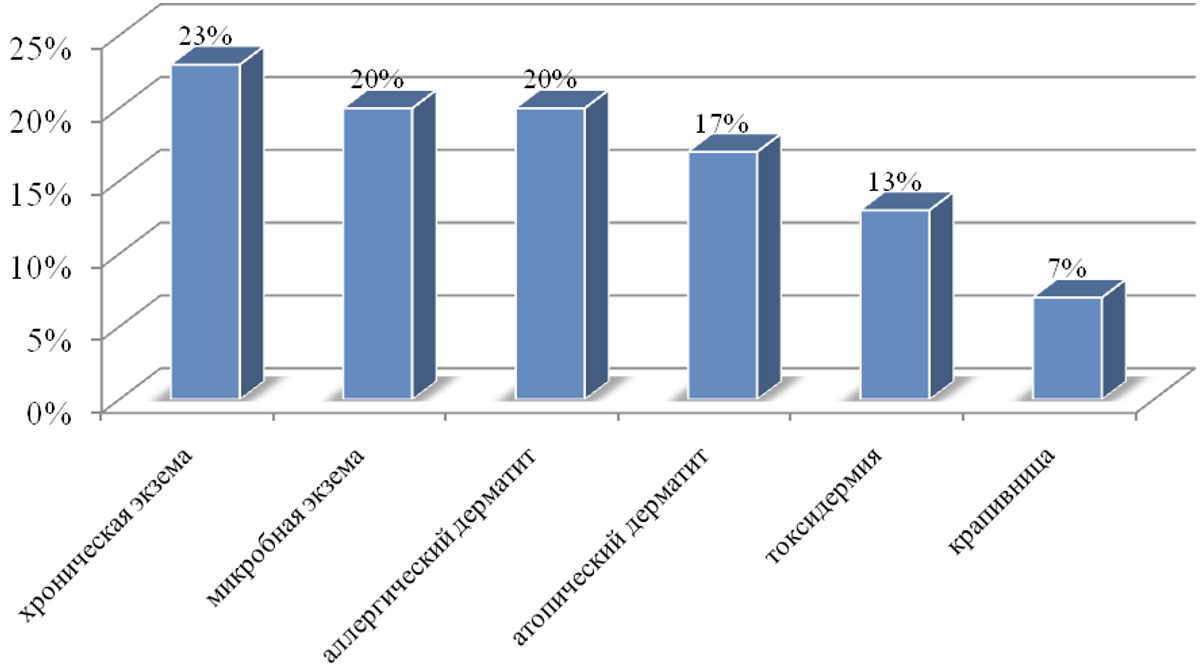
Rice. 1. Classification of patients according to nosological forms

The diagnosis was established on the basis of complaints, anamnestic data, clinical picture, and the results of an objective examination. All patients underwent laboratory tests at the beginning and end of treatment (general analysis of blood, urine, biochemical analysis of blood with determination of glucose, total protein, total bilirubin and its fractions, ALT, AST, microbiological analysis of feces).

Microbiological examination of feces was carried out on the basis of the bacteriological laboratory of the regional SES of Kharkov, the laboratory is certified for conducting these studies (attestation certificate No. 100-163/2013 dated 06.06.2013, valid until 06.05.2016) and has a permit to work with pathogens of the III-IV groups of pathogens (No. 130/28-12 dated 12/21/2012, valid until 12/21/2017).

Bacteriological examination of feces and the degree of dysbiotic disturbances were evaluated according to the unified working classification of Kuvaeva-Ladodo. [13]. The severity of intestinal dysbacteriosis was assessed by sowing serial diluted feces [14], using dense and liquid nutrient media: Endo, Ploskyrev, Saburo, Simmons, Olkenytskyi, Wilson-Blair, Blaurokk, and others.

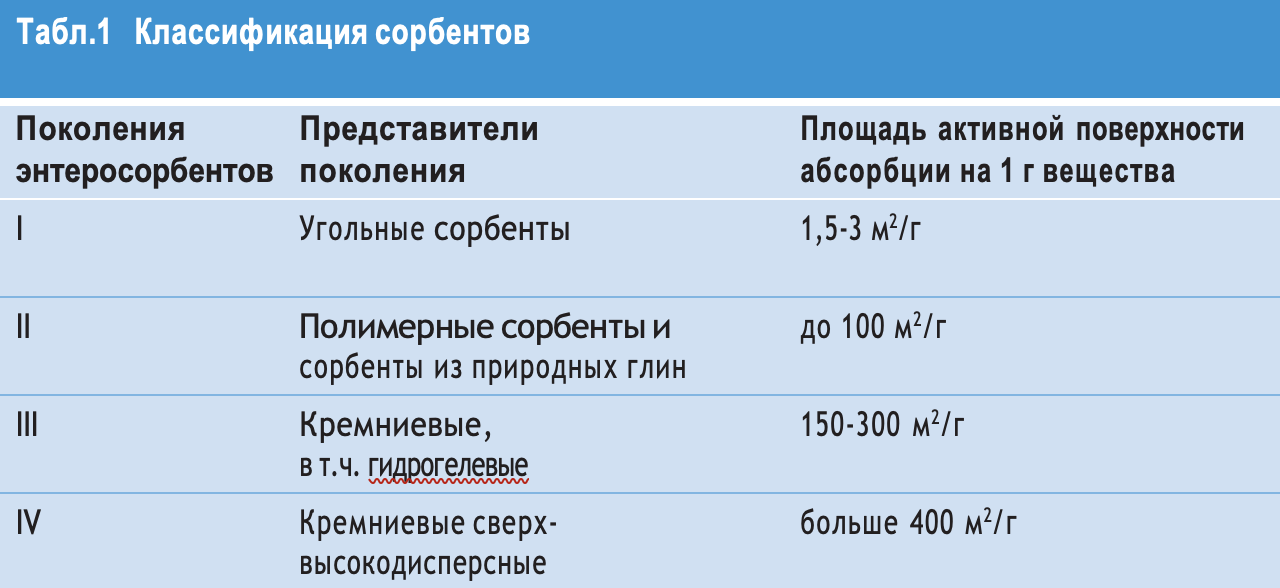
Atoxyl is a highly active silicon sorbent of the IV generation with an active absorption surface area of more than 400 m²/g, enhances the transport of food and bacterial allergens, a variety of toxic products, including medium molecules, oligopeptides, amines and other substances formed in the process of protein decay in the intestine, from the internal environment of the body (blood, lymph, interstitium), into the digestive tract due to concentration and osmotic gradients with their subsequent removal from the body. In the 90s of the last century, the unique properties of Atoxyl were discovered. Atoxyl has an electrostatic ability of sorption, due to which the drug, dissolving in water, acquires a negative charge and, accordingly, attracts everything that is positively charged. However, useful microflora, vitamins and microelements that have a neutral charge are not absorbed by them. In addition, this drug inactivates a large protein molecule in comparison with other enterosorbents.

Eliminal gel is a combined preparation that contains a highly active silicon sorbent and synthetic disaccharide lactulose. The drug has an antimicrobial effect, has a mediated detoxification, bactericidal and bacteriostatic effect against pathogenic and conditionally pathogenic bacteria and fungi. It has a targeted effect on the elimination of pathogenic bacteria and enterotoxins, allows to restore intestinal microbiocenosis and stimulate the growth and development of normal flora - bifidobacteria and lactobacilli. The components of the drug have a complementary and reinforcing effect in the correction of conditions associated with disorders of the gastrointestinal tract.

To assess the therapeutic effectiveness of stepwise absorption, all examined patients were divided into two groups. Group I patients received traditional treatment and step-by-step therapy: Atoxyl 1 bottle per day for 3 days followed by eliminal gel 1 stick package 3 times a day for 14 days; Group II patients – traditional treatment without the use of enterosorption.

Evaluation of the therapeutic effectiveness of the proposed stepwise scheme of enterosorption included the dynamics of subjective data (complaints about itching, burning, dryness) and objective data examined (skin process, as well as the state of intestinal microflora was studied dynamically).

RESULTS OF RESEARCH

In the main group, on the background of the application of the step-by-step scheme of the use of Atoxyl and Eliminal-gel, the improvement of the general condition in the control group was noted for 2–4 days, on the background of only basic therapy in the comparison group - for 7 days. Complete regression of each process in the main group was noted on days 9–11, in the comparison group – on days 14–17.

After the therapy, itching was reduced 3–4 days earlier in the patients of the main group than in the comparison group.

The most pronounced therapeutic effect was observed in patients with toxidermia. This group consisted of patients suffering from alimentary, less often drug-induced toxidermia of mild and moderate severity. Regression of the rash was noted on the 2nd–3rd day, which was two days earlier than in the patients of the comparison group.

In patients with eczema (microbial and true), there was a regression of acute inflammatory rashes, a decrease in the area of lesions 2–3 days earlier than in the comparison group.

As a result of the studies conducted before the treatment, a violation of the microbiocenosis of the large intestine was revealed in all 30 people (100.0 %). Thus, grade I dysbacteriosis was detected in 3 (10.0 %), grade II – in 16 (53.3 %), grade III – in 11 (36.7 %) examined persons.

Dysbiotic disorders were characterized by a decrease in the quantitative content of indigenous microflora - representatives of both aerobic and anaerobic bacteria. Most often, a decrease in the number of bifidobacteria was noted in patients - in 9 (30 %) people. In addition, a decrease in lactobacillus seeding rates was noted in 4 (13.3 %) patients and normal Escherichia coli in 3 (10 %) patients. These indicators deserve attention, since these microorganisms, on the one hand, provide colonization resistance of the intestinal biotope, preventing the penetration and fixation of pathogenic agents on the mucous membrane; and on the other hand, they are natural biosorbents that prevent the absorption of allergens in the intestines and stimulate the synthesis of Ig A - the main antibodies against food allergens.

An increase in the number of conditionally pathogenic microorganisms (H. alvei, K. pneumoniae, Proteus spp., E. aerogenes) was revealed in 25 (83.3 %) patients. Against the background of a qualitative imbalance of the microflora, changes in the quantitative composition were also revealed: E. coli with hemolytic properties was detected in 9 (30.0 %) patients, lactose-negative E. coli in 6 (20.0 %) and E. coli with reduced enzymatic activity in 2 (6.7 %) patients. The frequency of detection of Candida and S. aureus fungi attracts attention - in 22 (73.3 %) and 4 (13.3 %) examined, respectively. Thus, the revealed violations of the colonization resistance of the intestinal biotope, associated with a change in the composition of the permanent microflora, contribute to its colonization by pathogenic and conditionally pathogenic microorganisms, which leads to the formation of dysbiosis and, as a consequence, to the strengthening of food sensitization.

During the microbiological examination of the feces of the main group (15 people) after the treatment, a persistent trend in the normalization of the main indicators of the intestinal biota was noted. Thus, grade I dysbacteriosis was detected in 2 (13.3 %), grade II – in 6 (40.0 %), grade III – in 2 (13.3 %) examined (before treatment 10.0 %, 53.3 % and 36.7 %, respectively); in 5 people (33.3 %) against the background of the therapy, a complete normalization of all indicators was noted. Also, in the patients of this group, the normalization of the content of lactobacilli and bifidobacteria was noted - 14 people (93.3 %), in all 15 patients, the total number of typical Escherichia coli was restored with a complete absence of hemolytic cocci and opportunistic forms of enterobacteria. Also, after the complex therapy, there was a decrease in the indicators of insemination by fungi of the genus Candida from 73.7 % to 26.7 %.

During bacteriological examination of feces in patients of the comparison group (15 people), positive changes in the intestinal biota were significantly less pronounced. Dysbacteriosis of the I degree was revealed in 4 (26.6 %), II degree – in 10 (66.7 %) patients, III degree – in 1 (6.7 %) of the examined. Basically, there was a decrease in the content of bifidobacteria (in 33.3 % examined), lactobacilli (13.3 % patients), typical Escherichia coli (6.7 % patients) and an increase in the content of Escherichia coli with hemolytic activity (40.0 %), lactose-negative forms (13.3 %) against the background of the detection of Escherichia coli with reduced enzymatic activity (6.7 %), as well as conditionally pathogenic microorganisms (53.3 %), coccal forms of bacteria (S. aureus - 6.7 %) and the presence of Candida fungi (53.3 %). Thus, the need for additional correction of the biotope clinically remained.

The following diagrams show the dynamics of the main indicators characterizing the state of intestinal cenosis before and after the therapy (Figs. 2, 3).
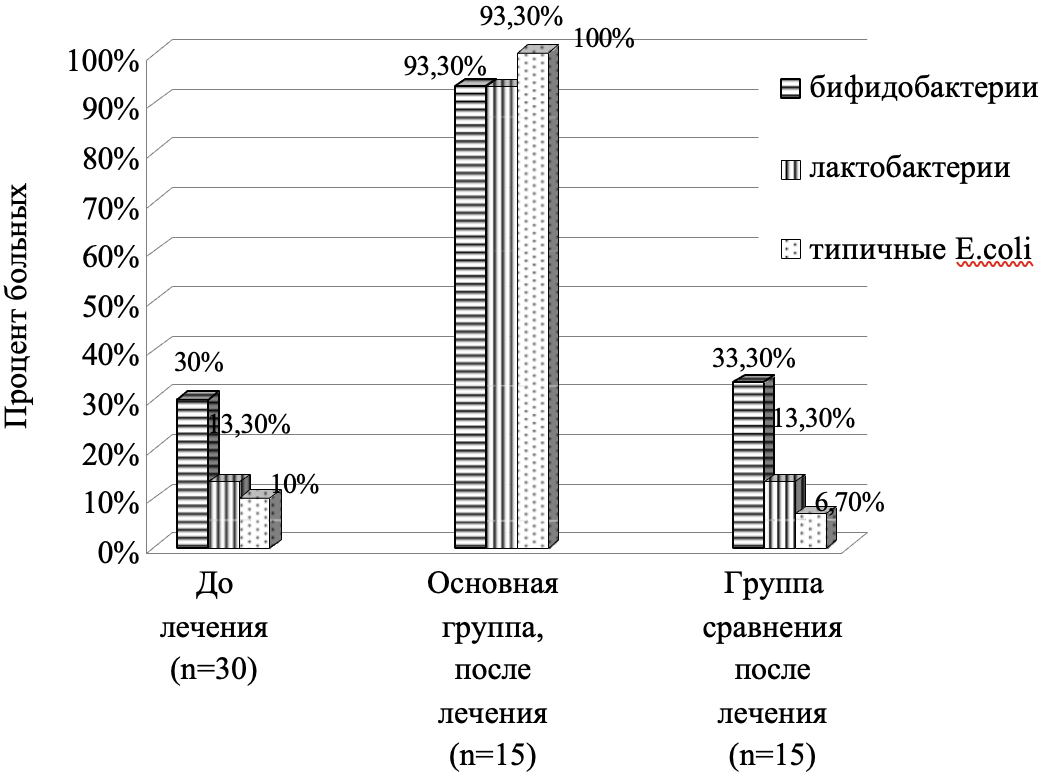
Rice. 2. Dynamics of the main indicators of intestinal biota
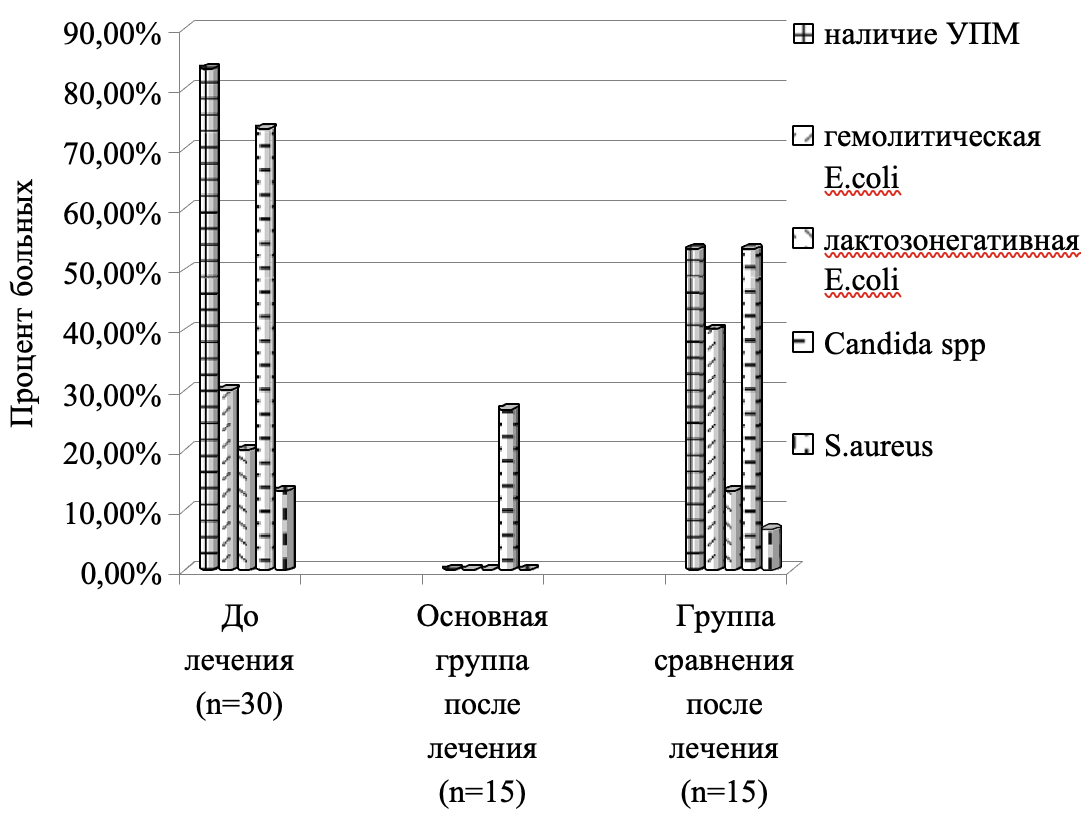
Rice. 3. Dynamics of clinically significant microorganisms in intestinal cenosis

A microbiological evaluation of the effectiveness of the method of treatment of allergic dermatoses using graded enterosorption was carried out. The microbiological effectiveness of the therapy consisted in the normalization of the number of bifidobacteria and lactobacilli, the absence of opportunistic enterobacteria, and a 2.7-fold decrease in the number of fungi of the genus Candida, improvement of the qualitative composition of intestinal biota with disappearance S. aureus, lactose-negative and hemolytic E. coli.

CONCLUSIONS 

Based on the above, efferent therapy of people with allergic diseases is pathogenetically justified and occupies a worthy place in the arsenal of modern means of rehabilitation of such patients. The developed method of treating allergic dermatoses with the use of graded enterosorption therapy has high therapeutic efficacy, is well tolerated by patients, and is practically harmless, allowing even without the additional appointment of lactobacilli and bifidobacteria to normalize intestinal biocenosis: reduce the content of pathogenic microflora and increase the content of beneficial ones.

LITERATURE

  1. Berzhets V.M. Potentiated form of allergen for specific allergy vaccination of patients with atopic diseases / A.I. Berzhets, I.A. Koreneva, M.N. Melnikova // Bulletin of new medical technologies. -2005. – No. 3/4 – P.67-69
  2. Bondarenko V. M. Intestinal dysbacteriosis in adults / V. M. Bondarenko, N.M. Gracheva, T.V. Matsulevych. - M.: KMK. - 2003. - 224 p.
  3. A.S. Botkina Dermatological manifestations of diseases of the gastrointestinal tract / A.S. Botkina, S.V. Belmer // Materials of the XIV Congress of Children's Gastroenterologists of Russia. - M.,
  4. Butorova L. I. Possibilities of correction of intestinal microbiocenosis disorders with lactulose / L. I. Butorova, A. V. Kalinin // Russian. journal gastroenterol., hepatol., coloproctol. - 2008. - No. 1. - P. 79-83
  5. Veselova L.V. Composition of microbiocenoses in patients with allergic dermatosis / L.V. Veselova, I.V. Hamaganova, M.I. Savina // IV scientific and practical conference "Socially significant diseases in dermatovenerology. Diagnostics, therapy, prevention" - 2006. - P.36-37.
  6. Hrynevych V.B. Principles of intestinal dysbiosis correction / V.B. Hrynevych, S.M. Zakharenko, G.A. Osipov // Treating doctor. – 2008. – No. 6. - P.6-9.
  7. Kopanev Yu.A. Intestinal dysbiosis: microbiological, immunological, clinical, micrological aspects. / Yu.A. Kopanev, A.L. Sokolov // M., 2002. – 147p.
  8. Kuvaeva I.B. Microecological and immune disorders in children / I.B. Kuvaeva, K.S. Ladodo. - M.: Medicine, 1991.
  9. Litynska T.O. The role and place of pancreatic enzymes in the treatment of patients with acute and chronic skin diseases / T.O. Litynska // Ukr. Journal of Dermatology, Venereology, and Cosmetology – 2009. – 4(35).
  10. Nikolaev, V.G. Nikolaev // Bulletin of the problems of biology and medicine. - 2007. - No. 4. - P.7-17.
  11. Novokshonov A. A. Clinical effectiveness of a new enterosorbent in complex therapy of acute intestinal infections of viral etiology in children / A. A. Novokshonov, N.V. Sokolova, T.V. Berezhkova, A.A. Sakharova // Treating Physician. – 2009. – No. 7– C.78-80.
  12. Pukhlyk B.M. The state of immunity of the population of Ukraine and ways of its correction / B.M. Pukhlyk // Medicines of Ukraine.– – No. 9. – P.32- 33.
  13. Uchaikin V.F. Enterosorption - the role of enterosorbents in complex therapy of acute and chronic gastroenterological pathology. / V.F. Uchaikin, A.A. Novokshonov, N.V. Sokolova, T.V. Berezhkova // Handbook for doctors. - M., 2008.-24 p.
  14. Methodical guidelines for bacteriological diagnosis of intestinal dysbacteriosis (for employees of the bak.laboratories of the SES of the Dnieper railway). - Dnipropetrovsk, 2001. - 7 p.

REFERENCES

  1. Berzhets VM, Koreneva, IA, Melnikova MN Potentsirovannaya forma allergena dlya spetsificheskoy allergovaktsinatsii bolnyih s atopicheskimi zabolevaniyami // Vestnik novyih meditsinskih tehnologiy.− 2005. − N 3/4. - S.67-69. (Russian)
  2. Bondarenko VM, Gracheva NM, Matsulevich TV Disbakteriozyi kishechnika u vzroslyih, – : KMK, 2003. - 224 s. (Russian)
  3. Botkina AS, Belmer SV Dermatologicheskie proyavleniya zabolevaniy ZhKT // Materialyi XIV Kongressa detskih gastroenterolov Rossii. - M., 2007. (Russian)
  4. Butorova I., Kalinin AV Vozmozhnosti korrektsii narusheniya kishechnogo microbiotsenoza lactulozoy // Ros. zhurn. gastroenterol., hepatol., coloproktol. - 2008. - No. 1. - S. 79-83. (Russian)
  5. Veselova V., Hamaganova V., Savina MI Sostav microbiotsenozov u bolnyih allergodermatozami // IV nauchno-prakticheskaya konferentsiya "Sotsialno znachimyie zabolevaniya v dermatovenerologii. Diagnostika, terapia, profilaktika".− 2006.− S.36-37.(Russian)
  6. Grinevich B., Zaharenko SM, Osipov GA Printsipyi korrektsii disbiozov kishechnika // Lechaschiy vrach. – 2008. – N 6. – S.6-9. (Russian)
  7. Kopanev A., Sokolov AL Disbakterioz kishechnika: microbiological, immunological, clinical, micrological aspects. - M., 2002. - 147s. (Russian)
  8. Kuvaeva B., Ladodo KS Mikroekologicheskie i immunnyie narusheniya u detey. – M.: Meditsina, 1991. (Russian)
  9. Litinska O. The role and role of enzymes of the pidshlunkovoyi zalozi in the treatment of acute and chronic skin diseases // Ukr. zhurn. dermatol., venerol., kosmetol. – 2009. – 4(35).(Ukrainian)
  10. Nikolaev VG Enterosorbtsiya: sostoyanie voprosa i perspektivyi na buduschee // Vestnik problem biologii -2007. -N 4.- S.7-17. (Russian)
  11. Novokshonov AA, Sokolova NV, Berezhkova V., Saharova AA Klinicheskaya effektivnost novogo enterosorbenta v kompleksnoy terapii stryih kishechnyih infektsiy virusnoy etiologii u detey // Lechaschiy Vrach. − 2009.−N 7.– C.78-80. (Russian)
  12. Puhlik BM State of immunity of the population of Ukraine and ways of its correction // Liki Ukrayini. − 2010. − N9. − P.32-33.
  13. Uchaykin VF, Novokshonov AA, Sokolova NV, Berezhkova TV Enterosorption – the role of enterosorbents in complex acute and chronic gastroenterological pathology // Posobie dlya −M., 2008.–24s. (Russian)
  14. Methodological instructions for the diagnosis of dysbacteriosis of the intestine (dlya rabotnikov bak.laboratoriy SES Pridneprovskoy zheleznoy dorogi). - Dnepropetrovsk, 2001. - 7 s. (Russian)

STEP-BY-STEP ENTEROSORPTION AS AN OPTIMAL METHOD FOR CORRECTION OF MICROBIOCENOSIS INTESTINAL DISEASE IN PATIENTS WITH ALLERGODERMATOSIS

Kutasevich Ya.F., Oliynyk I.O., Dzhoraeva S.K., Mangusheva V.Yu.

State Institution "Institute of Dermatology and Venereology of the National Academy of Medical Sciences of Ukraine"

Resume. The article presents data on the therapeutic efficacy of stepwise enterosorption using Atoxyl and Eliminal-gel in patients with allergic dermatoses, taking into account the study of the general condition, subjective and objective complaints, and intestinal microbiocenosis before and after the therapy.

Keywords: allergodermatoses, intestinal microflora, dysbacteriosis, stepwise enterosorption.

SPEED ENTEROSORPTION AS THE OPTIMAL METHOD OF CORRECTION OF GUT MICROBIOTA IN PATIENTS WITH ALLERGIC

Kutasevych YF, Oliinyk IO, Joraeva SK, Mangusheva VY

SE "Institute of Dermatology and Venereology of National Medical Sciences of Ukraine"

Abstract.. The article presents data on the therapeutic efficacy of using speed enterosorption Atoxil andeliminal gel in patients with allergic dermatoses, given the general state of research, objective and subjective complaints and bowel microbiocenosis before and after the therapy.

Keywords:: allergic dermatoses, the intestinal flora, dysbiosis, speed enterosorption.

About the authors:

Yanina Frantsevna Kutasevich - doctor of medicine. Sciences, professor, director of the Institute of Dermatology and Venereology of the National Academy of Sciences of Ukraine.

Oleynyk Iryna Aleksandrovna - doctor of medicine. of Sciences, senior researcher, chief researcher of the Department of Dermatology, Infectious and Parasitic Diseases of the Skin, State University "Institute of Dermatology and Venereology of the National Academy of Medical Sciences of Ukraine".

Zhoraeva Svetlana Karyagdiyevna - Candidate of Medicine. of Sciences, head of the microbiology laboratory of the Institute of Dermatology and Venereology of the National Academy of Sciences of Ukraine.

Viktoria Yuryevna Mangusheva is a graduate student of the Institute of Dermatology and Venereology of the National Academy of Medical Sciences of Ukraine.

Stepped enterosorption in the complex therapy of allergic dermatoses

Dermatologist 2015 · 06:272–278  
UDC616.5-056.3-08]616.34-085.246.9

E. Murzyna · A. Lytus

Department of Dermatovenerology, NMAPE named after P. L. Shupik, Kyiv

Stepwise enterosorption in complex therapy of allergic dermatoses

"Medicine there is addition and subtraction.

Taking away what is superfluous, adding what is missing. And whoever can do it best is the best doctor..."

In dermatological practice, the expression of Hippocrates is especially relevant in the treatment of allergic dermatoses. The basis of these diseases lies in the changed reactivity of the body, in particular the skin, in relation to exogenous and endogenous irritants - food, medicinal, chemical, household and professional. Also, violations of the barrier function of internal organs in accompanying chronic diseases facilitate the entry into the body of exoallergens of various nature (medicines, dust, food products, etc.), xenobiotics of industrial origin, and the processes of detoxification and elimination of these foreign substances from the body also change. The accumulation of these ingredients in the body leads to the development or exacerbation of manifested allergic dermatosis.

Removal of foreign substances that enter it from the environment, or toxic metabolic products formed in the body itself, can be achieved by methods of efferent therapy - from the Latin "efferens" - removes - a set of active detoxification methods aimed at stopping the action and removing from the body toxic substances, endogenous and exogenous toxins, poisons, chemicals, aggressive enzymes, foreign proteins and the like. This can be done by hemodilution, vulnerosorption, ultrahemofiltration, peritoneal dialysis, extracorporeal blood oxidation or enterosorption.

Preparations that carry out such elimination - enterosorbents - drugs of various structures that bind exo- and endogenous substances in the gastrointestinal tract by adsorption, absorption, ion exchange, complex formation.

Enterosorption is a traditional method of efferent therapy. But it has advantages over other methods of removing foreign substances from the body due to the absence of the need for surgical intervention on blood vessels and the associated risk of possible complications, the absence of a direct damaging effect on biological fluids (blood, lymph), ease of use and the possibility of wide use in outpatient treatment, in the field and at home, during training and competition; complete absence of contraindications and side effects. Enterosorption for a long time had limited use, since the sorbents available at that time showed low efficiency, required high dosages, and did not meet the requirements of selectivity. The efficiency of enterosorption directly depends on the quality of the sorbents used.

The action of enterosorbents when entering the body includes several interrelated stages - direct and indirect. The process includes adsorption and removal from the body of toxic substances that are formed directly in the intestines; binding of toxic substances entering the intestinal lumen from the blood, and thus preventing their reabsorption; cleaning of digestive juices containing a significant amount of toxic substances; modification of lipid and amino acid spectra of intestinal contents due to selective sorption of some amino acids, free fatty acids; biotransformation of highly toxic products into less toxic or even non-toxic substances.

In addition, the elimination of toxic substances formed in the intestine has a positive effect on the liver, kidneys, improving their functional state, as well as the activity of the cardiovascular system. This is due to the well-known ability of toxic metabolites, primarily molecules of medium molecular weight, so-called medium molecules, to destructure or significantly disrupt the functional state of the plasma membrane of hepato- and cardiocytes, erythrocytes, and other cells.

There is no clear classification of enterosorbents. From generation to generation, they are distinguished by more and more advanced and diverse adsorption properties, as well as additional, not only sorption, but also so-called mediated healing effects. From generation to generation, the active surface area of enterosorbents increases. Non-porous sorbents of the 4th generation have the maximum sorption area. At the same time, the entire surface area is active. Consequently, the daily dose of enterosorbents is reduced.

Enterosorbents are divided into the following groups: carbon sorbents based on activated carbon, granulated coal, carbon fiber materials; ion-exchange materials or resins; natural food fibers; other enterosorbents (clays, zeolites, Almagel, silica gels).

Other classifications of enterosorbents are also accepted: by dosage form - granules (coal), powders (carbolene, cholestyramine, povidone), tablets, pastes, food additives (pectins, chitin).

According to the chemical structure - activated carbon, aluminosilicates, aluminogel, sorbents of oxidizing, organomineral and composition, food fibers.

According to the mechanism of sorption - adsorbents, absorbents, ion-exchange materials, sorbents with catabolic properties, sorbents with combined mechanisms.

By selectivity - selective, mono-, bi-, polyfunctional, non-selective (activated carbon, natural preparations - lignin, chitin, cellulose).

By type of substance registration – dietary supplements and pharmacological preparations.

Also, the classification of sorbents is carried out according to evolution (Table 1).

The following requirements are imposed on modern enterosorbents:

  • Absence of a damaging effect on the mucous membrane of the gastrointestinal tract;
  • Good evacuation from the stomach;
  • High sorption capacity;
  • Beneficial influence on gastrointestinal secretion and biocenosis of microflora of digestive organs;
  • Convenient form and ease of dosing;
  • Absence of negative organoleptic properties of the sorbent (including aromatic additives).

Table 1 Classification sorbents

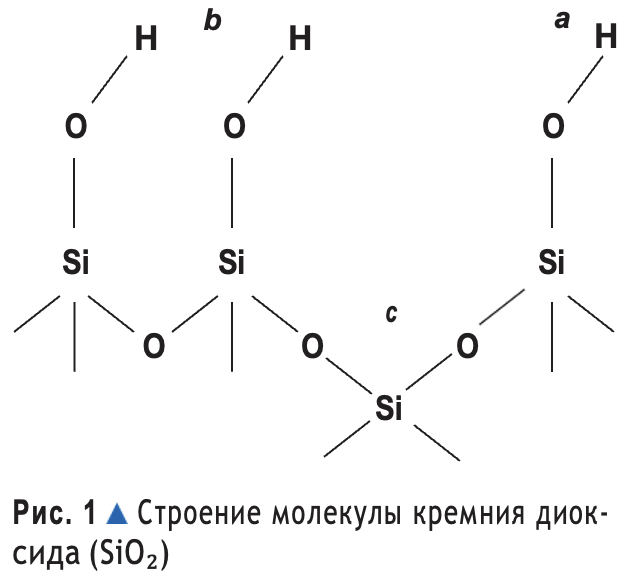
A real breakthrough in enterosorption was the unique development of domestic scientists - a compound of highly dispersed silicon dioxide, which in terms of its sorption properties is tens of times superior to all existing sorbents, and the speed of action and selectivity complement the unique properties of the molecule (Fig. 1), they allow to remove edema, heal wounds locally. Silicon dioxide promotes transportation from the internal environment of the body (blood, lymph) to the gastrointestinal tract and the removal of various toxic products, including: alkaloids, glycosides, salts of heavy metals, organophosphorus and organochlorine compounds, barbiturates, ethyl alcohol and products of its metabolism; biologically active substances associated with the processes of allergy and inflammation (prostaglandins, serotonin, histamine), metabolic products (urea, creatinine, final nitrogen), lipids. Silicon dioxide contributes to the reduction of the metabolic load on detoxification organs (primarily the liver and kidneys), elimination of the imbalance of biologically active substances in the body, correction of metabolic processes and immune status, improvement of lipid metabolism indicators such as cholesterol, triglycerides and total lipids.

The unique production of highly dispersed silicon dioxide was founded at the Orysil-Pharm plant in 2005 in Kalush, Ukraine, under the Atoxyl brand. The only plant in the territory of Eastern Europe and Asia, which produces highly dispersed silicon dioxide according to the original method. There are only three such factories in the world.

The raw material for the production of Atoxyl is silicon oxide, which, as a result of original processing at a temperature of 2000°C, acquires the appearance of microspherical particles. Upon entering water, the particles attach hydroxyl groups of water to themselves and form an original spatial structure with a strong electrostatic charge, which is the reason for the high speed of sorption. In 4-5 minutes, 80% absorbs toxic substances, which provides a quick therapeutic effect and clinical result.

Silicon dioxide manufactured by Orisyl-Pharm has passed the FDA and USA Pharmacopoeia tests according to USP 29-NF24 monograph tests, does not absorb water, vitamins and microelements, and even with long-term use, does not cause changes in the electrolyte composition of the body. It allows to combine therapy with other drugs, as it quickly fills its sorption capacity.

Thus, fulfilling the first commandment of Hippocrates in the treatment of allergic dermatoses, we do not leave the second component "adding the missing one". It is reliably known that patients with allergic dermatoses have a violation of intestinal microbiocenosis, which is accompanied by the absence or sharp decrease in the number of bifidobacteria, colonization of enteropathogenic hemolyzing E.coli and impaired production of IgA by the intestine.

From the modern point of view, the normal intestinal microflora can be considered as a set of indigenous microorganisms that constantly populate the digestive tract and represent a non-specific barrier of protection against pathogenic bacteria and other exogenous factors of aggression. Under the conditions of a normal physiological state, the relationship between "macroorganism and microflora" has a symbiotic character, while the microorganisms inhabiting the human gastrointestinal tract perform a variety of vital functions, including the processes of digestion and absorption, intestinal trophicity, the synthesis of vitamins, enzymes, amino acids, have a bactericidal and bacteriostatic effect on pathogenic microflora, provide anti-infective protection and immunoregulatory function, participate in the synthesis class A immunoglobulins, natural antibodies, in the morphogenesis of the immune system.

Representatives of the normal microflora of the intestine - bifidobacteria, lactobacilli, lactococci, propionic acid bacteria - have high immunogenic properties, which are manifested primarily in the support of the concentration of secretory IgA on the mucous membrane (not only the intestine), regulation of the maturation of the lymphoid apparatus of the intestine, and the generalization of the immune response. In turn, the immune system is a regulator of maintaining the balance of intestinal microbiocenosis. According to the postulates of microbiological medicine, all drugs affecting intestinal microflora (beneficial) are divided into three types: prebiotics, probiotics and symbiotics.

Prebiotics are indigestible food ingredients that stimulate the growth and metabolic activity of one or more groups of native bacteria (lacto- and bifidobacteria) in the large intestine. There is a large number of bifidogenic factors that stimulate the growth of their own intestinal microflora (antioxidants, unsaturated fatty acids, organic acids, oligo-, mono-, polysaccharides, peptides, enzymes, etc.). The main component of the prebiotic component of functional nutrition is dietary fiber - the sum of polysaccharides and lignin, which are not digested by the endogenous secretions of the human gastrointestinal tract. One of the most important effects of dietary fiber is the improvement of the digestive function of the body and the formation of healthy intestinal microflora.

Synthetic prebiotics include lactulose. In the small intestine, there are no disaccharidases for its hydrolysis, therefore lactulose enters the large intestine practically unchanged, where it undergoes bacterial hydrolysis with the formation of monosaccharides and short fatty acids. Under the action of lactulose, the intra-intestinal pH level decreases in the acidic direction. An acidic environment inhibits the growth of pathogenic and opportunistic bacteria, and also ensures optimal action of digestive enzymes. Due to the formation of short-chain fatty acids, lactulose provides protection and regeneration of the intestinal mucosa, restores the permeability of the intestinal wall caused by enterotoxins; increases the osmotic pressure of the intestinal contents, which leads to fluid retention in it; activates peristalsis; there is an increase in the saccharolytic intestinal microflora. Therefore, the use of prebiotics in the complex treatment of allergic dermatoses is justified and shown from the standpoint of normalizing the state of intestinal microflora.

The company "Orisil-Pharm" has developed a modern drug based on selective highly dispersed silicon dioxide and natural prebiotic lactulose - Eliminal Gel, which, thanks to its complex composition, has a detoxifying, immunomodulating and restorative effect, promotes rapid colonization of the intestines with bifidobacteria and lactobacilli, activates the processes of growth and restoration of its own protective intestinal microflora, helps to correct the balance and composition of normal intestinal microflora.

The Department of Dermatovenerology of the P.L. National Academy of Medical Sciences Shupyk, on the basis of the Kyiv City Clinical Dermatology and Venereology Hospital, which is the clinical base of the department, clinical observations of the use of the drug "Atoxyl" and "Eliminal Gel" in the complex therapy of children with allergic dermatoses were carried out. The drugs were provided to the hospital as humanitarian aid.

Research materials and methods

20 children with allergic dermatoses, aged from 6 to 17 years (average age – 11.7±0.76 years), participated in the clinical observation. Among them: there were 14 children with atopic dermatitis, 1 with eczema, and 5 with allergic dermatitis.

"Atoxyl" and "Eliminal Gel" were added to the complex traditional therapy, which included systemic and topical preparations. "Atoxyl" was prescribed 1 vial per day in 3 doses 1.5 hours before meals - 3 days, then "Elimin Gel" was prescribed - for 10 days 1.5 hours before meals, 1 stick 2 times a day for children under the age of 13, 1 stick 3 times a day for children aged 14–17 years. To objectively assess the severity of the disease before and after treatment, in children with atopic dermatitis and eczema, we used a quantitative assessment - the SCORAD coefficient (kS), which was calculated by estimating the area of skin damage (A); the degree of manifested (B) (erythema, formation of papules/vesicles, wetness, excoriations, lichenification, dry skin) and subjective (C) (itching of the skin and sleep disturbances) symptoms. With the maximum prevalence of the process and the manifestation of objective and subjective symptoms, SCORAD = 103, and with their complete absence, SCORAD = 0.

According to the severity of each process, the value of the SCORAD coefficient (kS) can be conditionally divided: 0 ≤ kS ≤ 30 – mild degree, 31 ≤ kS ≤ 60 – medium degree, kS > 61 – severe degree of disease.

The SCORAD coefficient (kS) was calculated by the computer program "SCORAD Calculator" of the Belgian company "AIIS" (USB Pharmar - 1997).

According to the efficiency parameters oftreatment of allergic children dermatitis, were taken assessment dynamics values (here 0 "absence"et" to 3 - "very strongly expressed") of the following symptoms: papules/shellsshenie, hyperemia, itching. 

Research results

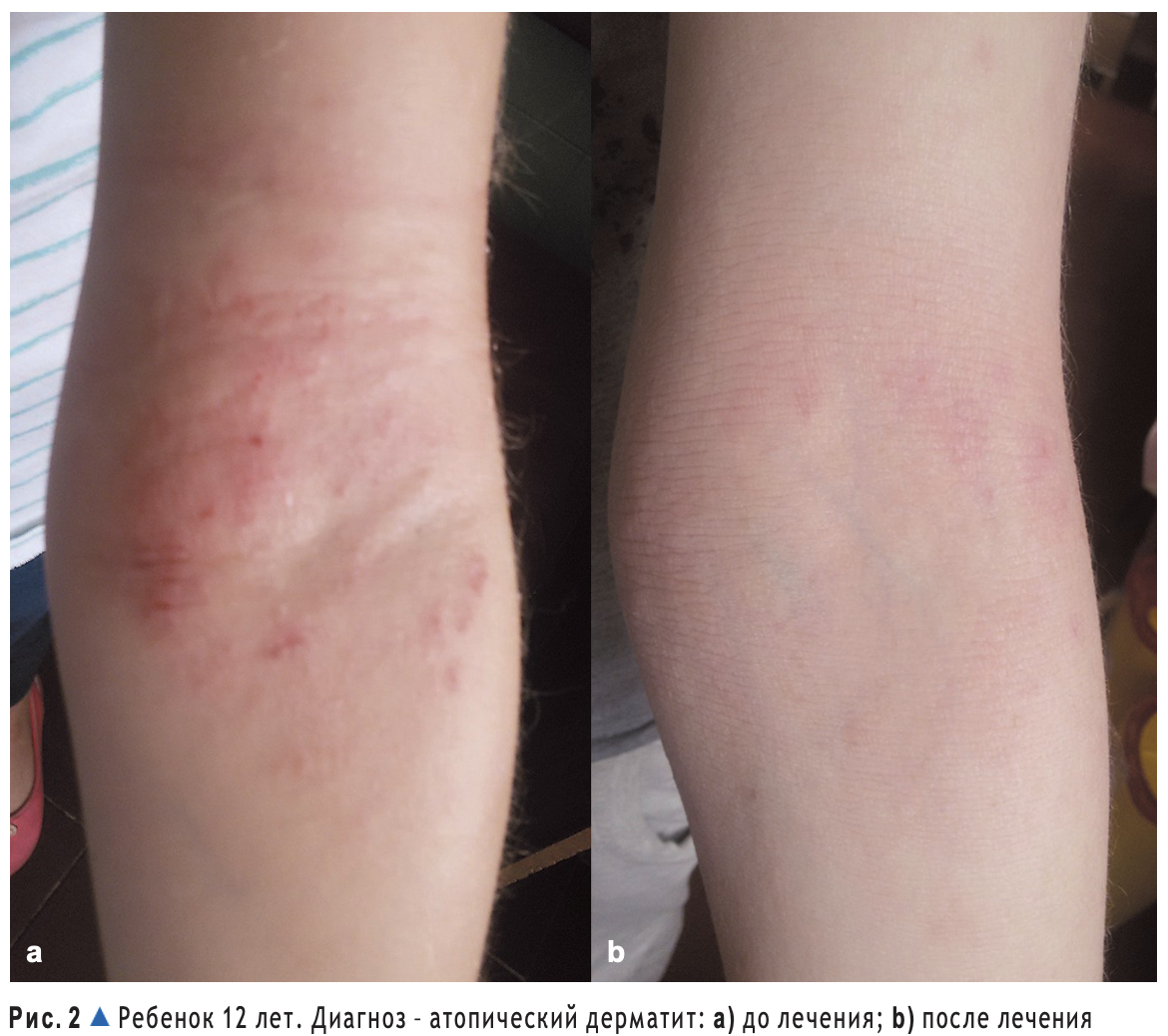
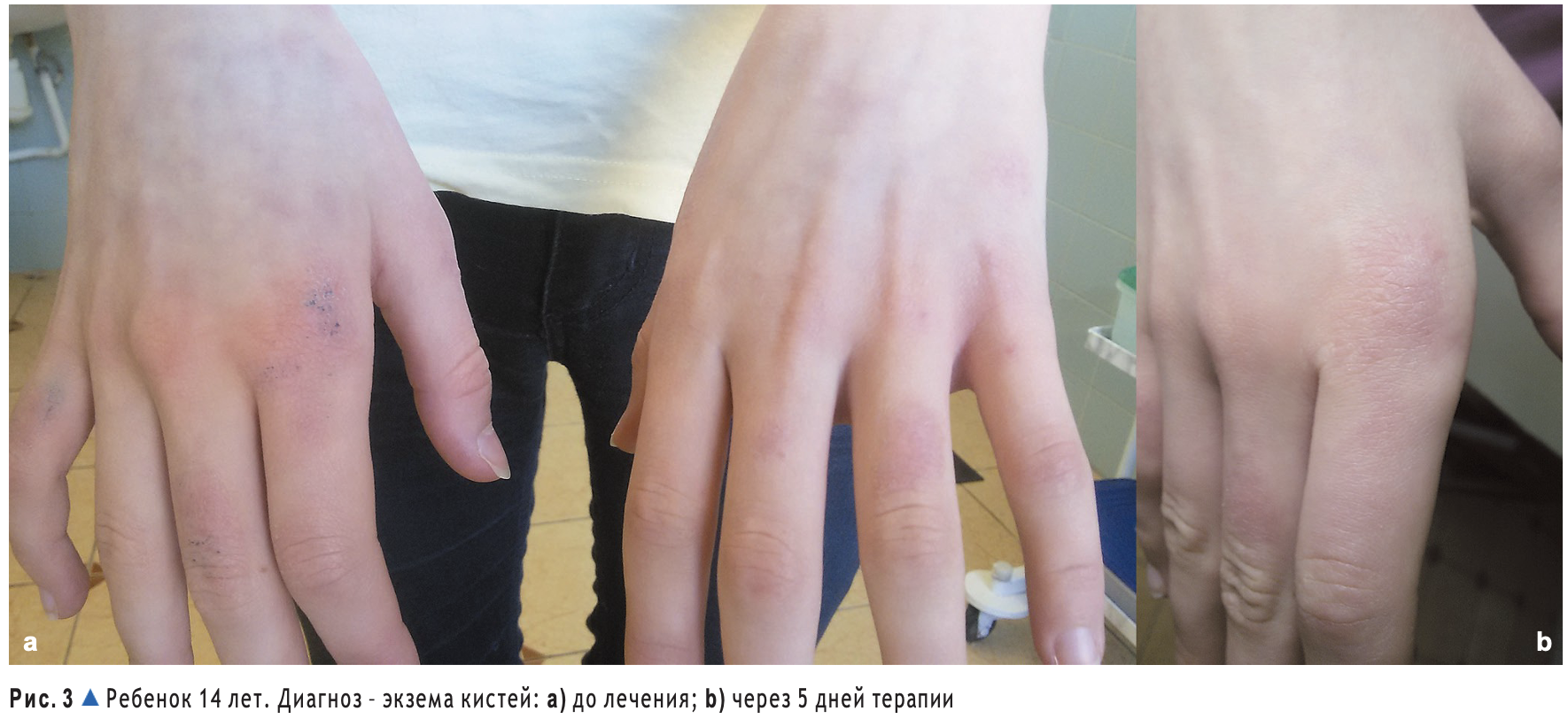
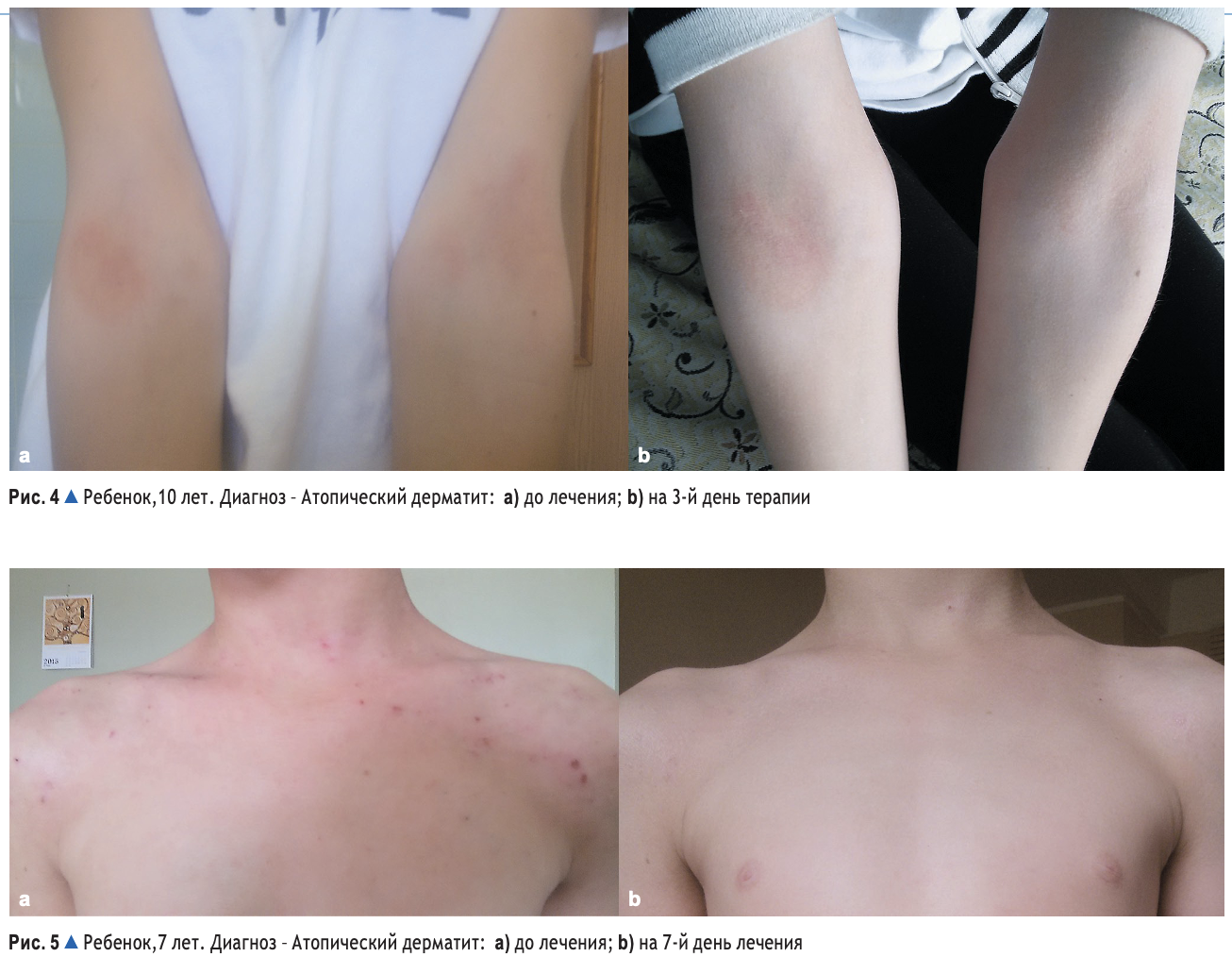
In children with atopic dermatitis and eczema, who received therapy with Atoxyl and Eliminal Gel, we noted positive dynamics in the clinical manifestations of the disease (Figs. 2–5). This occurred in the reduction of infiltration and hyperemia in the lesions, the involution of papular rashes and the shedding of crusts, the reduction of itching and the normalization of sleep, already in the first 3 days of using the drug. On average, the SCORAD coefficient was 35.57 ± 3.54 before treatment in observed children with manifestations of atopic dermatitis, a disease of mild and moderate severity. After 10-14 days of treatment, the SCORAD coefficient decreased on average to 10.61 ± 0.82. The pathological process was completely resolved during therapy in 14 of 15 children. In one child, we observed repeated exacerbation of the pathological process as a result of a gross violation of the hypoallergenic diet.

Significant results of therapy in children with allergic dermatitis using Atoxyl and Eliminal Gel became noticeable after 3 days of therapy. And if before the beginning of the treatment, the average value of papular rash was estimated at 2.60 ± 0.24, hyperemia – 1.60 ± 0.24, and itching was equal to 3, then in the course of further therapy the rating decreased from 3 (“very strongly expressed”) to 0 (“absent”). In 80% patients (4 out of 5), clinical manifestations of dermatitis were completely absent on the 7th day of using the drug "Eliminal Gel", and in one patient the pathological process was completely resolved on the 13th day of therapy.

The effectiveness of the therapy was evaluated according to the following parameters: clinical remission (clinical recovery), significant improvement, improvement, no effect. Summarizing the results of 3-day use of Atoxyl and 10-day Eliminal Gel in the complex therapy of children with atopic dermatitis and eczema, we found clinical remission in 12 children (80,00%) with atopic dermatitis and 1 child with eczema; significant improvement of the condition – in 1 child with atopic dermatitis. In 1 boy (6.67%), a repeated worsening of the pathological process was observed due to a gross violation of the diet, we attributed this condition to the assessment of effectiveness - "no changes". But the repeated appointment, with the purpose of detoxification and removal of harmful substances from the body, significantly eased the general condition of the child and contributed to the speedy resolution of the pathological process. In all 5 children with allergic dermatitis, we observed clinical recovery (100,00%). All patients assessed the tolerability of Atoxyl and Eliminal Gel as "very good" or "good". There were no cases of children refusing to take the drug due to negative organoleptic properties.

Practical conclusions

The use of enterosorbents and drugs that normalize the state of normal intestinal microflora in the complex therapy of allergic dermatoses is reasonable and effective. Modern domestic drugs "Atoxyl" and "Eliminal Gel", containing silicon dioxide as an enterosorbent and prebiotic lactulose, contribute to the rapid removal of endo- and exotoxins from the body, which caused the exacerbation of the pathological process or provoked the onset of the disease, and led to the correction of the balance and composition of the normal intestinal microflora. This is a reflectionmoose on the state of the clinical cardny: to the quick solution of clinical problems manifested by a pathological process, normalization of sleep and reduction of itching in patients. This makes it possible to quickly improve the quality of life not only of young patients, but also of their parents.

Address for correspondence

E. Murzyna

Candidate of Medical Sciences, Associate Professor of the Department of Dermatovenerology, P. L. Shupyk National Academy of Medical Sciences

elvina2003@ukr.net

Conflict of interest: The authors declare that there is no conflict of interest.

Literature

  1. Skin diseases in children: translated from English / D. Abek, V. Burgdorf, H. Kremer - M.: Med. Lit. – – 160 p.
  2. Belyakov N. A., Solomennikov A. V. Enterosorption — mechanism of therapeutic action //Efferent therapy. 1997, vol. 3, No. 2.
  3. Korotky N. G., Tikhomirov A. A. et al. Atopic dermatitis in children. Tver: Triada, 238 p.
  4. Kutasevich Ya.F. Principles of treatment of atopic dermatitis // Clinical Immunology, Allergology, Infectology. – – No. 3/1. – P. 37-45.
  5. Mavrov I.Y., Bolotnaya L.A., Serbina I.M. Fundamentals of diagnosis of treatment in dermatology and venereology // Handbook for doctors, interns and students. Kh.: Fact, - 792 p.
  6. Nikolaev V. G. and others. Enterosorption: the state of the question and prospects for the future // Bulletin of the problems of biology and medicine. No. 4, p. 7–17.
  7. Nikolaev V. G., Guryna N. M. Enterosorption today: sorption materials and mechanism of action. Electron. resource URL: http://kiulong.cjm. ua/content/view/66/58/
  8. Paliy I.G., Reznychenko I.G. Modern view of the problem of enterosorption: selection of the optimal drug. News of medicine and pharmacy. 2007; 11:
  9. Ursova N. I., Gorelov A. V. Modern view of the problem of enterosorption. Optimal approach to drug selection. RMZh. 2006; 19: 1391-1396.

First aid for diarrhea    

Summer is a traditional time of travel, vacations, holidays, and... diarrhea. According to scientists, this scourge spoils the mood and cancels the big plans of every third vacationer from year to year.

In 40% cases, the cause of diarrhea remains unknown. After all, not only pathogenic microorganisms can cause a “rebellion” in the body, but also nutritional problems, dietary overloads, food incompatibility, an excess of coarse fiber in food, allergic reactions to certain foods (mushrooms, berries, seafood), side effects of medications. Our body gets used to certain food, water and a known set of bacteria in them. Moreover, this “set” sometimes differs significantly even in neighboring regions.

This, as a result, can provoke the body to get rid of all sorts of "strangers" as soon as possible, which it does not need or are harmful and dangerous. Regardless of the cause that caused diarrhea, treatment should be started immediately. Today, in the treatment of acute diarrhea of any origin, as well as in dysbacteriosis, colitis and enterocolitis, special absorbent substances - enterosorbents - are necessarily used, which absorb foreign harmful substances and remove them from the body. Among them, Atoxil stands out - a fourth-generation sorbent based on silicon dioxide. It has significant advantages over most known sorbents. Possessing a large "working" surface area - 400 m2/g, Atoxil begins to cleanse the body of toxins, pathogenic microbes, viruses and allergens 4 minutes after administration.

Acting as a natural filter, Atoxil not only cleanses the body of unwanted substances, but also leaves beneficial substances, restoring normal microflora. At the same time, to achieve the effect, large dosages and long courses of use are not required. Also, Atoxil has practically no side effects, and it is prescribed even to children from the first years of life.

With Atoxil with you, you can easily overcome diarrhea and not lose a single day of the long-awaited summer!

Producer LLC “Orisil-Pharm”

Registration certificate of the Ministry of Health of Ukraine/ No. UA/2616/01/01 dated 10.12.2009 No. 937. Before use, read the instructions and consult a doctor.

Kebab fever  

Forewarned is forewarned!

Are you ready for May picnics? Ready with skewers, an arsenal of coal and firewood, and not at all with dry rations - the landing party of barbecue lovers is located in suburban forests and on the banks of reservoirs. Meat and fish are being prepared on the grill, drinks are waiting for their turn in a cold place, fresh vegetables and herbs are tempting on plates. They haven't forgotten about leisure either - music is playing, football is being played on the lawn, there is a disco in the birch grove, and sun lovers are trying to get their first tan on the lakeshore.

It seems that nothing has been forgotten – both for the soul and for the body. Nevertheless, after a fun vacation, sad consequences are often possible. Someone gets scratched, someone

"too much" sunburn, and some people even got a stomach ache from fresh, but still grown in a greenhouse cucumbers, radishes, tomatoes, not fried kebab or simply from the incompatibility of products. And if a scratch in nature can be treated with the same vodka or cognac, then poisoning is not so easy to get rid of. Therefore, so that a fun vacation does not become an unpleasant event, you need to take care in advance that the "first aid" for diarrhea and poisoning are always at hand.

Quickly and effectively in such cases will help Atoxil – a new fourth-generation enterosorbent. This is a domestic drug that has a colossal sorption surface area – 400 sq. meters and the fastest possible effect – already 4 minutes after administration Atoxil begins

"cleansing" the body from pathogenic microbes, viruses, nitrates, as well as their toxins! It is very important that Atoxil can also be used for children who may eat with unwashed hands outdoors, and – hello, diarrhea! Atoxil comes in sachets, making it convenient for luggage and does not require special dosing devices. When preparing for your May vacation, put it in your backpackAtoxil – and your vacation will be fun and carefree!

Chronic fatigue syndrome

100 reasons – one solution!

Tired to the core? You are not warmed by a new fur coat, a new movie, or a salary increase? Your head is cloudy, your attention has dulled, your memory has turned off? Oh, you also start everything half-heartedly? Do you fall asleep on the go and suffer from insomnia? Have you lost interest in life and don't want anything? Congratulations! So you have reached a state of nirvana. Or, more likely, you have contracted the "disease of active people", also known as the "strange plague", fatigue syndrome or chronic fatigue syndrome. According to British scientists, nowadays every 200th inhabitant of the earth suffers from it, although with varying degrees of severity. The body itself is not able to fight off diseases and infections, as well as effectively get rid of the products of its own vital activity, and as a result, poisoning occurs. A vicious circle. Finding a way out of it, as it turned out, is possible only with the help of special substances that absorb all this "junk", namely with the help of sorbents. All other options, for the most part, are ineffective. Many people in such cases quickly restore their well-being with the help of a fourth-generation sorbent based on silicon dioxide - Atoxyl.

An important property of Atoxil, and an advantage over other drugs, is its sorption area - over 400 sq. meters. Atoxil binds and removes pathogenic microbes, toxins, viruses, toxins and allergens from the body. In addition, Atoxil is absolutely safe for the body, it is prescribed even to children from the first years of life. And therefore Atoxil can be used without a doubt on the eve of an appointment with a doctor. And soon, with the return of desires, opportunities and a taste for life will appear.

Before use, read the instructions and consult a doctor. Registration certificate of the Ministry of Health of Ukraine/ No. UA/2616/01/01 dated 10.12.2009 No. 937.

Comparative assessment of the ability of enterosorbents to bind protein substances

I. I. Gerashchenko, T. V. Krupskaya, V. V. Turov Institute of Surface Chemistry named after A.A. Chuyko, NAS of Ukraine,
Kyiv, st. Generala Naumov, 17

Comparative evaluation of the ability of enterosorbents to bind protein substances

Resume. A comparative assessment of the sorption activity of representatives of various classes of enterosorbents in relation to high-molecular protein compounds was carried out. As a marker of the effectiveness of the sorbents, the indicator of the sorption activity of such protein substances as human serum albumin (SAH) and gelatin was used. Samples of enterosorbents, the most widely represented on the market of Ukraine - Atoxyl, Smekta, Enterosgel, activated carbon - were studied by the methods of thermogravimetry, microscopy and adsorption of proteins in the aqueous medium. The maximum sorption activity of Atoxyl has been proven at a pH corresponding to the medium of the upper part of the small intestine, including in terms of a therapeutic dose.

Resume. A comparative assessment of the sorption activity of representatives of different classes of enterosorbents with respect to high-molecular protein compounds was carried out. As a marker of the effectiveness of the sorbents, the sorption activity index of such protein substances as human serum albumin (SAL) and gelatin was used. By the methods of thermogravimetry, microscopy and adsorption of proteins in an aqueous medium, samples of enterosorbents most widely represented on the Ukrainian market - Atoxil, Smecta, Enterosgel, activated carbon were studied. The maximum sorption activity of Atoxil was proven at a pH corresponding to the contents of the upper small intestine, including in terms of the therapeutic dose.

Summary. There was carried out a comparative evaluation of the sorption activity of different classes of enterosorbents relative to high molecular weight protein substances. As a marker of the sorbents efficiency action, the sorption activity index of proteins such as human serum albumin (HSA) and gelatin was used. The methods of thermogravimetry, microscopy and protein adsorption in water medium were used to study the samples of the most widely represented enterosorbents in the Ukrainian market, such as: Atoxil, Smecta, Enterosgel, and Activated Charcoal. The maximum sorption activity of Atoxil in terms of the therapeutic dose under the pH, which corresponds to the medium of the upper section of the small intestine, was proven.

At present, enterosorption, as a method of removing foreign substances from the body, falling from the environment or formed in the body itself as a result of pathological processes, is widely used in medical practice. Enterosorbents have shown their effectiveness in the treatment of diarrhea syndrome, food poisoning, bacterial infections, allergic reactions and other pathological processes accompanied by intoxication [1, 2].

The pharmaceutical market of Ukraine presents sorbents of various classes: based on highly dispersed silicon dioxide (Atoxyl), methylsilicic acid hydrogel (Enterosgel), montmorillonite clay (Smecta) and various forms of activated carbon [3, 4]. Representatives of different classes of enterosorbents can differ significantly in their sorption activity and ability to bind toxin molecules of different molecular weight. From a practical point of view, a comparative study of the effectiveness of the use of different classes of enterosorbents is of significant interest.

As is known, the basis of the pathogenesis of bacterial infections and other diseases accompanied by intoxication is the accumulation in the body of pathological proteins, bacterial toxins or oligomeric protein complexes, which are substances with a high molecular weight. The molecular mass (m.m.) of typical protein toxins is 15–170 kDa. So, for example, M.m. botulinum toxin is 150 kDa [5]. Since a significant part of toxins accumulating and forming in the gastrointestinal tract is associated with protein molecules or has a protein origin, it seems necessary to evaluate the sorption activity of representatives of various classes of enterosorbents in relation to high molecular weight protein compounds. As a marker of the activity of sorbents, the efficiency of the sorption of such protein substances as human serum albumin (SAA) and gelatin [1] can serve. Gelatin is a protein that is a mixture of polymer homologues with a molecular weight that corresponds to the typical weight of most protein toxins. In particular, the adsorption of gelatin is introduced as a parameter for assessing the quality of adsorbents in pharmacopoeial methods.

Materials and methods

Samples of enterosorbents of the corresponding series were taken for research (Table 1).

Table 1.


As test substances for the study of protein adsorption, we used: 1) 10 % solution of human serum albumin (solution for infusions, medicinal product); 2) edible gelatin Bloom 200 (Belgium), series 1574737. The test was carried out by the method of constructing an adsorption isotherm according to the methodological recommendations of the State Expert Center of the Ministry of Health of Ukraine [6]. Weight doses of drugs were the same in terms of dry residue, the content of which was determined using thermal analysis.

Results and discussion

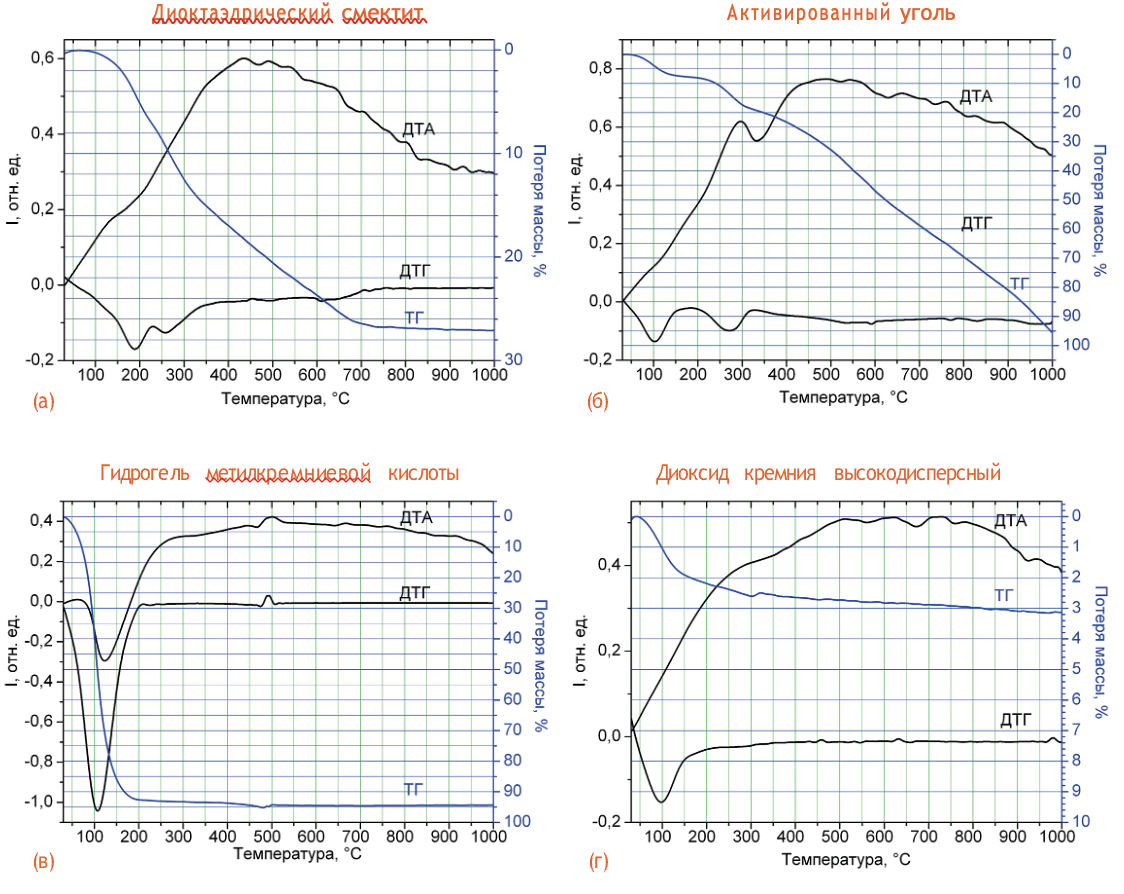
Thermogravimetric studies were carried out on a Paulik&Paulik derivatograph. The sample heating rate was 10 degrees/min, the limit temperature in the furnace was 1000 °C. The measurements were carried out to determine the amount of water and auxiliary substances in the samples. At the same time, we used the fact that water is removed from systems with a developed surface, to which the studied samples belong, at temperatures T < 150 °C. At temperatures T < 400 °C, the gasification of most organic compounds (sugar, polymers) used in some enterosorbents as auxiliary substances occurs. Alkyl groups attached to the surface of organosilicon compounds can be destroyed at temperatures up to 550 °C. Thermograms of the studied samples are shown in Fig. 1a-g. In particular, mass loss curves (TG curve), as well as DTG and DTA curves are presented. The DTG curve is a dm/dT derivative. It makes it possible to more accurately determine the position of the inflection points on the mass loss curve, which corresponds to the processes that occur in the sample when the temperature increases. The DTA curve is the second derivative of mass loss. With its help, you can identify the type of process. Thus, maxima on the DTA curve correspond to exothermic processes, and minima to endothermic processes.

For the preparation of dioctahedral smectite (Fig. 1a) at T < 150 °C, the mass of the sample practically does not change, which indicates the almost complete absence of bound water. Two minima are recorded on the DTG curve at 180 and 260 °C. The inflection points on the mass loss curve (TG curve) correspond to them. The maximum mass loss of the sample is 27 % at 700 °C. According to the manufacturer's instructions, the main substance is dioctahedral smectite (3 g), and the auxiliary substances are glucose - 0.749 g, sodium saccharin - 0.007 g, and vanillin - 0.004 g. Thus, the loss of mass during heating of the sample occurs due to the destruction of auxiliary substances, and their amount corresponds to the one declared by the manufacturer. The presence of one broad maximum on the DTA curve indicates the exothermicity of the processes of destruction of auxiliary substances (heat is released when heated).

Unlike dioctahedral smectite, during thermal destruction of activated carbon, gasification of all carbon material present in the sample occurs. The ash content of the sample is 9.05 % (Fig. 1b). The first minimum on the DTG curve is observed at 100 °C. It corresponds to the evaporation of the water present in the sample, the amount of which is 7 % by weight. The second minimum at 280 °C corresponds to the destruction of polymer substances, the amount of which, according to the TG curve, is about 12 % mass. Since auxiliary substances are not specified by the manufacturer, the most likely is the presence of a polymer component used for the production of tablet forms. At 330 °C, an endothermic peak is observed on the DTA curve. It can be caused by the rearrangement of the carbon skeleton of polymer molecules during their carbonization.

The ash content of the methylsilicic acid hydrogel sample (Fig. 1c) is 6.7 % mass. This is the amount of dry residue that was formed when polymethylsiloxane was heated. About 93 % of the mass of the sample is water, which is used by the manufacturer for the production of hydrogel and is removed from the preparation at T < 150 °C. Accordingly, one minimum is registered on the DTG curve at 100 °C. A small endothermic maximum on the DTA curve at 500 °C can be associated with the removal of hydroxyl groups from the polymethylsiloxane matrix, which occurs together with the destruction of methyl groups. Thus, the amount of the active substance in the methylsilicic acid hydrogel sample does not exceed 6–7 % mass.

Rice. 1. Thermograms of the investigated sorbents: dioctahedral smectite – (a); activated carbon – (b); methylsilicic acid hydrogel – (c); highly dispersed silicon dioxide - (g).

The thermogram of a sample of highly dispersed silicon dioxide is shown in Fig. 1 year It shows one minimum on the DTG curve at 100 °C, which corresponds to mass loss due to moisture evaporation. The initial moisture content of the sample is 3 % mass, which corresponds to the standards laid down in the Pharmacopoeia and is consistent with the quality control standards of the manufacturer. Small exothermic peaks at 500–800 °С probably correspond to the process of condensation of silanol groups.

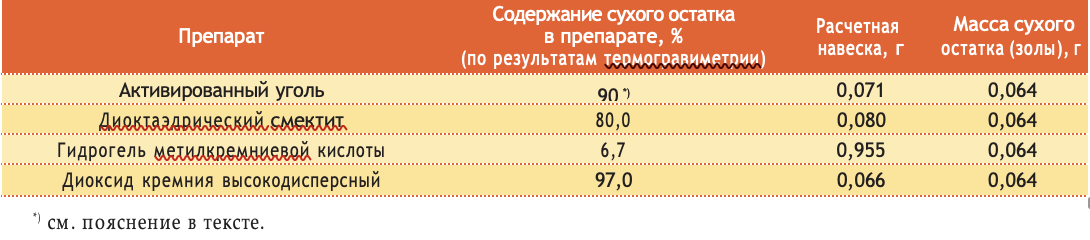
Summary indicators of the content of dry residue after calcination of samples of the investigated sorbents at 1000 °C are presented in table. 2.

Table 2.

The content of the dry residue after calcination of the samples of the investigated sorbents at 1000 °C


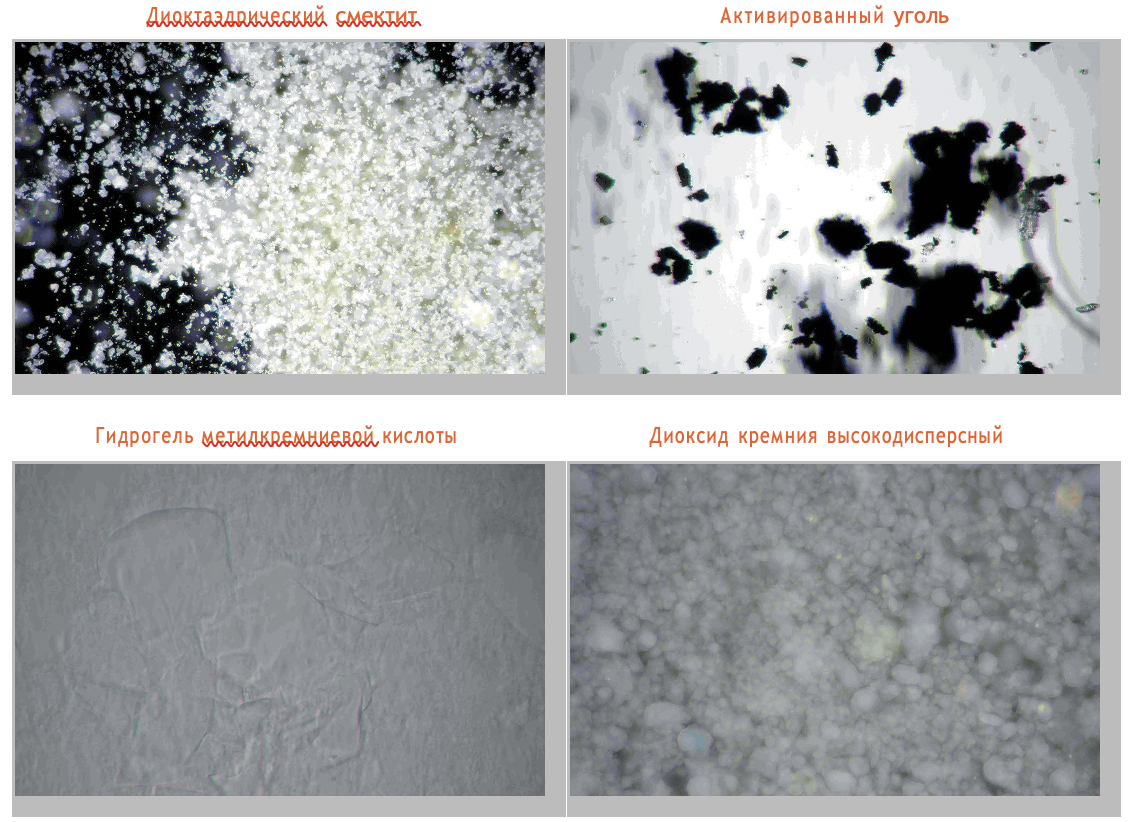
Photomicrographs of sorbents obtained with a Primo Star, Zeiss microscope are presented in fig. 2.

Rice. 2. Photomicrographs of sorbents obtained with the Primi Star Ceis microscope, Yena: dioctahedral smectite – (a); activated carbon - (b); methylsilicic acid hydrogel – (c); highly dispersed silicon dioxide - (g).

The studied materials, with the exception of methylsilicic acid hydrogel, are present in the form of particles, the size of which ranges from units to several tens of microns. A sample of methylsilicic acid hydrogel was studied in the form of an aqueous gel, since its drying leads to a complete change in morphology and surface characteristics. Optically inhomogeneous structures are observed on the surface of the gel (Fig. 2c), which is probably due to the crystallization of the gel, the spontaneous change of the dispersion medium, and the separation of the liquid phase.

When studying the activity of protein sorption, 8 ml of solutions of SAC or gelatin with increasing concentration were added to 7 samples of each of the preparations. For the comparability of the results, the obtained adsorption data for dioctahedral smectite, hydrogel of methylsilicic acid, and highly dispersed silicon dioxide were calculated for the same mass of dry residue, determined by the method of thermal analysis (see above). Since activated carbon is completely gasified during thermal analysis, the weight of the sample was calculated based on the composition of the tablet declared by the manufacturer (Table 3).

Calculation of a portion of the drug taken to study protein sorption activity

Table 3.


Water solutions of SAC and gelatin were used for the study. The concentration of sorbent solutions (Co) added to samples was in the range of 0–1 % (0–10 mg/ml) for SAC and in the range of 0–0.8 % (0–8 mg/ml) for gelatin. Test tubes with the obtained suspensions were shaken on a shaking apparatus for 2 hours, then centrifuged at a frequency of 6000 rpm for 20 minutes. 4 ml of biuret reagent was added to 1 ml of each centrifuge, mixed and left for 30 min.

The optical densities of the obtained solutions and the reference solution were measured at a wavelength of 540 nm against a blank solution. To prepare the reference solution, 4 ml of biuret reagent was added to 1 ml of the standard protein solution, mixed and left for 30 minutes. The blank solution was a mixture of 1 ml of water and 4 ml of biuret reagent. Based on the linear nature of the dependence of the optical density on the concentration, the concentration of the protein in the centrifuge (equilibrium concentration, Cr) was found. Then the amount of adsorption (A, mg/g) was calculated according to the formula:

A = (Со – Ср) × 125,
where 125 (coefficient) = 8 ml of medium/0.064 g weight dose.

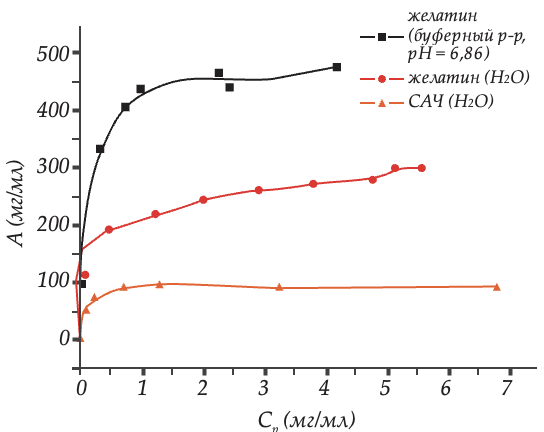
The adsorption isotherms of gelatin and SAC on the surface of highly dispersed silicon dioxide are shown in Fig. 3. Taking into account that the pH value is not fixed in the aqueous medium, which can affect the amount of sorption [1], we studied the adsorption of gelatin from water and a phosphate buffer solution, the pH of which is 6.86 and the presence of salts in dissociated form (0.05 M) bring the experiment closer to physiological conditions (model of the upper part of the small intestine). The buffer solution was prepared from a standard mixture of sodium hydrogen phosphate and potassium phosphate according to GOST 8.135:2009.

From fig. 3, it follows that the Langmuir-type adsorption isotherms obtained [7]. For highly dispersed silicon dioxide, the maximum adsorption (Amax) of gelatin from the buffer solution reaches 480 mg/g, and from water only 300 mg/g. The efficiency of adsorption of SAC by highly dispersed silicon dioxide is characterized by the value Amax = 100 mg/g. The difference in gelatin adsorption values when the pH changes is due to the fact that the adsorption of protein molecules is controlled by electrostatic interactions [1,8] and, in addition to pH, also depends on the ionic strength of the solution.

Rice. 3. Adsorption isotherms of gelatin from a buffer solution and water and SACH from water on the surface of highly dispersed silicon dioxide (Atoxyl).

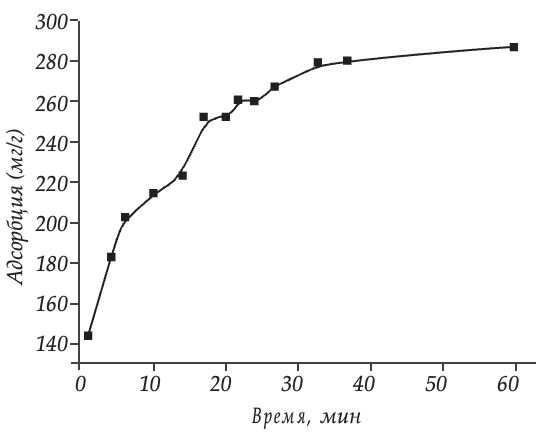
Adsorption of protein molecules on the surface of hydrophilic silica (Atoxyl) is carried out quite quickly. In fig. 4 presents the kinetic curve of gelatin adsorption from water by highly dispersed silicon dioxide. It can be seen that 70 % of the protein present in the solution is absorbed by the silica surface during the first 10 min (200 mg/g) of interaction. After this, the rate of adsorption slows down, and a bend is observed on the kinetic curve, which corresponds to an adsorption time of 15 min (250 mg/g). According to the kinetic curve, it can be concluded that within 30 minutes (280 mg/g) highly dispersed silicon dioxide practically fully realizes its adsorption potential.

Among other investigated sorbents, activated carbon does not adsorb SAC at all, which completely coincides with the results of previous studies [9]. The coal pores are too narrow for protein substances and other high-molecular compounds to penetrate into them. Adsorption of SAC by dioctahedral smectite is insignificant, the adsorption indicators obtained in different experiments are concentrated in the range of 40–60 mg/g. The value of the maximum adsorption of SAC from water for the methylsilicic acid hydrogel is 330 mg/g.

Treatment of aqueous dispersion of highly dispersed silicon dioxide with ultrasound has a significant effect on the amount of gelatin adsorption. After ultrasonic treatment of hydrophilic silica for 5 minutes, the maximum adsorption value increases to 580 mg/g. This is due to the fact that the maximum amount of active silanol groups is released on the surface of silica, which makes them more accessible for the adsorption of protein molecules.

Rice. 4. Kinetics of gelatin adsorption on the surface of highly dispersed silicon dioxide (Atoxyl) from an aqueous solution.

Maximum sorption (Amax, mg/g) of SAC and gelatin by the studied preparations

Table 4.

Table 5.
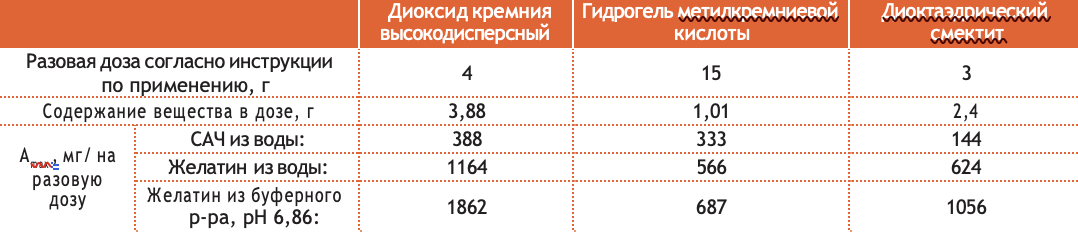
Maximum absorption (Amax, mg/g) of the studied drugs in terms of a single therapeutic dose.

The adsorption characteristics of highly dispersed silicon dioxide in comparison with the maximum adsorption values obtained for other adsorbents are shown in table. 4.

To compare the therapeutic effect of the studied enterosorbents, we recalculated the adsorption value for a single dose specified in the instructions for the use of the drugs (http://mozdocs.kiev.ua) [10]. The results are shown in the table. 5. As can be seen, the efficiency of sorption with respect to SAC from an aqueous medium increases in the order of dioctahedral smectite < hydrogel of methylsilicic acid < highly dispersed silicon dioxide, and with respect to gelatin both from water and from a buffer solution, it increases in the order of hydrogel of methylsilicic acid < dioctahedral smectite < highly dispersed silicon dioxide.

Thus, with enteral use in the form of ready-made dosage forms presented on the pharmaceutical market of Ukraine, highly dispersed silicon dioxide can be considered the most effective in relation to the sorption of protein compounds.

Conclusions:

  1. The maximum value of sorption in relation to protein molecules is shown by highly dispersed silicon dioxide at a pH corresponding to the medium of the upper part of the small intestine.
  2. The rate of adsorption of proteins on the surface of highly dispersed silicon dioxide is quite high. Within 30 minutes, Atoxyl almost fully realizes its adsorption potential.
  3. Activated carbon practically does not absorb proteins, since its structure is represented by micropores that are inaccessible for the penetration of high-molecular compounds.
  4. In calculating the amount of protein sorption per therapeutic dose, highly dispersed silicon dioxide (Atoxyl) is significantly superior to methylsilicic acid hydrogel and dioctahedral smectite, which is especially evident in the case of gelatin adsorption.

Literature:

  1. Lutsyuk M. B., Kulyk Ya. M. Highly dispersed pyrogenic silica as a means of efferent and enterosorption therapy // Saponite and aerosil in livestock and medicine / M. F. Kulyk [et al.]; eds. M. F. Kulyk, T. V. Zasukha, M. B. Lutsyuk. – Vinnytsia: Rogalska I. O., 2012. – 362 p.
  2. Medicinal chemistry and clinical application of silicon dioxide // Ed. A. A. Chuyko – Kyiv: Naukova dumka, 2003.
  3. Gerashchenko I. I. Enterosorbents: medicines and dietary supplements, Kyiv: NASU, O. O. Chuyko Institute of Surface Chemistry, 2014. – 248 p.
  4. Bergna HE (Ed.) Colloidal Silica: Fundamentals and Applications, Taylor & Francis LLC, Salisbury, 2005.
  5. Yu.V. Ezepchuk Pathogenicity as a function of biomolecules. - M., 1985.
  6. Preclinical study of enterosorbents. Method. recommendations /V.G. Nikolaev, N.T. Kartel, E.A. Posohova et al. - Kyiv: State Expert Center of the Ministry of Health of Ukraine, 2010. - 56 p.
  7. Ayler R. Chemistry of silica: trans. with English, Part 1, 2. - M.: Mir, 1982. - 1127 p.
  8. Gunko V. M., Turov V. V., Horbyk P. P. Water at the interphase boundary. - Kyiv: Nauk. dumka, 2009. -694 p.
  9. Khubutia M. Sh., Tsivadze A. Yu., Garaeva G. R., Andreev V. N., Goldyn M. M. Adsorption of free hemoglobin by electrochemically modified activated carbons. Message 2. Blood plasma. // Macroheterocycles – 2012. – 5 (4–5). - pp. 327–332.
  10. Official instructions for the use of drugs (http://mozdocs.kiev.ua).

Comparative evaluation of the use of the enterosorbent Atoxil

UDC 616.379-008.64:617.586-002.3/.4]-085

COMPARATIVE ASSESSMENT OF THE USE OF ENTEROSORBENT "ATOXYL" IN THE COMPLEX TREATMENT OF PURULOUS-NECRotic PATIENTS WITH DIABETIC FOOT SYNDROME.

S.M. Antonyuk, A.A. Derevyanko, V.B. Akhrameev, P.F. Golovnia, V.D. Timofeev, N.V. Sviridov, I.B. Andryenko.

State Medical University, Donetsk

Resume. The work is a study of the course of the wound process when using the enterosorbent "Atoxyl" in patients with diabetic foot syndrome.

Keywords: diabetic foot syndrome, enterosorbent, treatment

Diabetic foot syndrome is a serious complication of diabetes. This disease often leads to disability. It is known that the risk of developing gangrene in these patients is 10–15 times higher than in people who do not suffer from diabetes. Approximately 50% patients with diabetes have once undergone surgery [2, 3, 4].

As a result of impaired blood supply and innervation, diabetes leads to a delay in healing processes and a high risk of wound infection. Poor wound healing occurs in 50% cases, and the risk of infection is 5 times higher. Consequently, surgical treatment of purulent-necrotic lesions in diabetic foot syndrome is a difficult task [5, 6, 7].

Despite the achievements of modern medicine, the level of high limb amputations remains high and ranges from 40 to 50% [V.B. Kuramov, N.B. Toothless]. An important task of surgical treatment of complicated forms of the diabetic foot is to reduce mortality from purulent-septic complications and preserve the supporting function of the foot.

The purpose of the work was to study the course of the wound process when using the enterosorbent "Atoxyl" in patients with diabetic foot syndrome.

Materials and methods. A center for the treatment of patients with diabetic foot syndrome operates in the clinic of surgical diseases of the FPO No. 2 of DonSMU. Over the past 6 months, we have treated 37 patients with this pathology aged 52 to 76 years (15 men, 22 women). Of them, 12 patients with trophic ulcers; after opening phlegmon – 4; after resection of the foot - 9; after the exarticulation of the fingers - 12. The study of the course of the wound process was carried out by cytological examination of swabs from the wound exudate or an impression from the bottom of the wound within 1 to 7 days of postoperative intervention. The analysis of the exudate from the wound allowed us to judge the course of the wound process and the influence of the enterosorbent in the complex treatment of diabetic foot syndrome. After fixation, smears and prints were stained according to Romanovsky-Giemse. Smears and prints were subjected to qualitative and quantitative studies, and at the same time, a microscopic study of the microflora in smears and prints was conducted in dynamics when using an enterosorbent.

General clinical and biochemical analyzes of blood and urine were performed on patients, ultrasound dopplerography was performed to study blood flow, volume blood flow was studied on the Logic-5 device. To the complex treatment described in one of our reports [1], we added the drug "Atoxyl", which is an enterosorbent produced by CJSC "Lviv Pharmaceutical Factory" registration number UA/2616/01/01, which belongs to silicon ultrahigh-dispersion enterosorbents of the IV generation. This drug was used by us in the treatment of purulent-necrotic wounds as one of the stages of wound preparation before closing the wound defect with an amniotic membrane. For small defects, the drug in the amount of 3–5 g was applied to the wound and covered with a dry bandage. Dressings were made every other day. With large defects on the foot, which appeared after the opening of phlegmon, resection of the foot, we used an absorbent bandage, which is several layers of gauze filled with an enterosorbent. After opening the phlegmon and resection of the foot according to Chopar, Sharp or at the level of the Lisfranc joint, after appropriate treatment with the removal of purulent-necrotic foci to healthy tissues, "Atoxyl" was placed in the wound in the above-described bandage from the first to second day. Dressings were made daily with washing of the wound with solutions of antiseptics.

Results and discussions. The postoperative period in all patients was different and depended on the level and degree of foot damage (localization, depth of purulent-necrotic processes, etc.). The main criterion for evaluating the effectiveness of treatment was the state of the cellular composition of the separated wound in the dynamics during treatment.

A day after surgery, 23 patients were cytologically diagnosed with signs of acute staphylococcal infection (++++) with the death and dystrophy of neutrophilic leukocytes, incomplete phagocytosis up to 11%, with the presence of 15–20 staphylococci per p/zr. In 11 patients, only single staphylococci were determined among the cellular elements of the blood or there were no microbes at all.

5–7 days after the operation, under the influence of complex and local treatment, staphylococcal microflora disappeared and phagocytosis was completed. At the same time, the number of preserved neutrophilic leukocytes increased in the wound exudate. In the rest of the patients, the exudate from the wound was sterile according to cytological data.

Only in three patients in whom "Atoxyl" was used, 2–3 days after the operation, a moderately expressed staphylococcal wound infection (++) with incomplete phagocytosis was observed.

Quantitative cytological studies of the cells of the wound exudate obtained from the wound indicated, in general, relatively pronounced inflammation at the bottom of the wound, which was equally pronounced after the first or second day after the operation.

The differences in the dynamics consisted in a decrease in the number of dystrophically altered neutrophils two days after the operation compared to the first days. When comparing the reaction of neutrophils in the exudate from the wound obtained a day after the operation, a slightly more pronounced inflammatory reaction was noted if "Atoxyl" was not used (24–26 in p./sp.) compared to wounds where "Atoxyl" was used (10–15 p./sp.). At the same time, 1–2 days after the operation, the percentage of connective tissue cells from the separated wound was higher in wounds with the use of "Atoxyl" than in wounds without its use.

2–3 days after the operation, in wounds without the use of enterosorbent, the inflammatory reaction was at a higher level (26.3% of neutrophils per p/sp., necrosis - 23.7%, neutrophil dystrophy - 46.4%) than in wounds with the use of "Atoxyl" (18.6% of neutrophils per p/sp., necrosis - 20.7%, dystrophy - 40.7%), and the number of normal segmented neutrophils was significantly less (32.3–46.9%), which corresponded to the data noted above during the wound process in the absence of treatment or when using this sorbent.

The course of the wound process after 2-3 days is presented in the table:

The obtained cytological data allow us to conclude that the enterosorbent "Atoxyl" used in complex treatment improves wound cleansing, which contributes to the reduction of wound preparation time for plastic surgery. In the same cases when the enterosorbent was not used, suppuration and the development of the necrotic process in the wound were noted. 2–3 days after the operation, a wound infection was detected in 12 and 25 patients, respectively, with the presence of staphylococcus (+) and Gram-positive bacillus (+) in the wounds when Atoxyl was used and without its use. The infection intensified the necrotic-dystrophic process in these patients. 5–7 days after the operation, wound infection due to staphylococci was noted in 12 patients. However, the infection was stopped by the introduction of antibiotics. The marked wound infection did not significantly affect the proliferation of connective tissue cells, and the inflammatory reaction was moderate or weak.

Based on the results of the study, the terms of surgical interventions were determined. Thus, in the group of patients without the use of "Atoxyl", the possibility of performing the specified interventions arose within 20–22 days (21 ± 3 days on average). In the group of patients who received "Atoxyl", the possibility of performing the specified interventions arose within 14–16 days (on average 15 ± 3 days).

Conclusions.

  1. Thus, there is a difference in the degree of wound infection with and without the use of Atoxyl.
  2. The obtained data testify to the positive effect of the enterosorbent "Atoxyl" on the course of the wound process, in particular, when it is prepared for the closure of the amniotic membrane. This made it possible to reduce the time of wound preparation from 20-22 days to 14-16 days.

Literature 

  1. Antonyuk S.M., Sviridov N.V., Popandopulo A.G. etc. Features of surgical treatment of patients with complicated forms of diabetic foot syndrome // Clinical Surgery - No. 10. - P. 36-39.
  2. Bregovsky V.B. Scientifically based standards of diagnosis and treatment of purulent-necrotic complications of the diabetic foot syndrome in ambulatory-policlinic conditions // Standards of diagnostics and treatment in purulent surgery. Scientific and practical materials. conference, Moscow, Oct. 23-24 2001.
  3. Gostischev V.K., Afanasyev A.N. Standards of medical and diagnostic measures in patients with diabetic osteoarthropathy and purulent-necrotic lesions of the feet // Standards of diagnostics and treatment in purulent surgery. Scientific and practical materials. conference, Moscow, Oct. 23-24
  4. V.V. Hrubnyk, V.V. Hot, A.S. Pylypenko, E.A. Antsypovych. A modern approach to the treatment of complicated diabetic angiopathy of the lower extremities // Clinical Surgery. – – No. 7. – P. 11-13.
  5. Dedov I.I. Diabetes mellitus - problem XXI // Doctor. – – No. 1. – P. 4-5.
  6. Lyapis M.O., Gerasymchuk P.O. Justification of the early use of autodermoplasty in the treatment of wounds in patients with diabetic foot syndrome //Clin. Surgery. – – No. 8. – P. 30-32.
  7. Shor N.A., Zeleny I.I. Indications and selection of the level of amputation of the lower extremity due to diabetic angiopathy with purulent-necrotic lesions of the tissues of the foot // Klin. surgery. – – No. 8. – P. 47-49.

Get rid of worms without harming yourself

Get rid of helminths, did you not offend yourself?

Everyone knows from childhood that it is necessary to get rid of helminths, but few people think about why... Although scientists have long proven that parasites inside a person can cause most of the changes and diseases of each of us.

And if you take into account the prevalence of helminthiasis and the practical impossibility of observing all preventive measures, it can be assumed that you also have them. And if you are in contact with animals, like strawberries and meat - that is a reason to think about getting rid of unnecessary ballast.

Most often, helminthiasis manifests itself in the form of: constipation, diarrhea, gas and bloating, irritable bowel syndrome, muscle pain, allergies, acne and problem skin, anemia, weight problems - both on the smaller side and on the bigger side, nervousness and sleep disorders, chronic fatigue syndrome, weakened immunity and frequent inflammation of the respiratory tract and even oncology.

So if something from the above is bothering you and you can't get rid of it, you need to think about ubiquitous parasites.

If you decide to part with your helminths, then the treatment should be complex - not only the destruction of the parasites themselves, but also the elimination of the consequences of their vital activity in the human organism (entoxicosis, allergy, etc.), as well as possible manifestations of toxicosis, allergies as a result of the mass death of helminths against the background of the use of an anthelmintic agent.

A modern highly active sorbent of the 4th generation - Atoxyl, which acts for 5 minutes - instantly binds toxins dangerous to humans when helminths disintegrate, which helps to get rid of parasites imperceptibly for the well-being.

According to the recommendations of Professor S.A. Kramarev, the main pediatric infectious disease specialist of Ukraine, the treatment of helminthiasis should be carried out in 3 stages.

  • 1st stage: 3-5 days before the appointment of an anthelmintic drug, a course of treatment with antihistamines and an enterosorbent (Atoxyl) is carried out.
  • 2nd stage: Anthelmintic (Vormil, Vermox) on the 1st day of treatment is taken in half a single dose, on the 2nd-5th day - in a full dose. Against the background of taking the drug, treatment with antihistamines and Atoxyl continues. With enterobiosis, a full dose of the drug is given on the 1st day.
  • 3rd stage: for 5 days after the end of the treatment with anthelmintic, the reception of antihistamines and Atoxyl continues.

Evaluation of the effectiveness of the enterosorbent Atoxil in the complex treatment of ascariasis in children

EVALUATION OF THE EFFECTIVENESS OF THE ENTEROSORBENT ATOXYL IN THE COMPLEX TREATMENT OF ASCARIDOSE IN CHILDREN

V.V. Korneva, L.V. Kurylo, V.G. Kozachuk, E.A. Boyarskaya, M.A. Kapichina

National Medical Academy of Postgraduate Education named after P. L. Shupyk, Kyiv City Children's Clinical Hospital No. 1

Resume. IN article presented results research efficiency enterosorbent 4 generations "Atoxil" in complex treatment of ascariasis in children. According to the results of the studies, the high therapeutic efficiency and good tolerability of the drug were revealed, which allows us to recommend it for wide use in the complex treatment of helminth infections, in particular, ascariasis, in dogs.

Key words: helminths, ascariasis, children, enterosorption, Atoxyl.

Introduction

According to the WHO, 4.3 billion people on Earth suffer from parasitic infections, of which about 1.4 billion suffer from ascariasis [2].

According to numerous studies, parasitosis contribute to the more frequent occurrence of somatic and exacerbation of chronic diseases, having a multifaceted effect on the host's body.

It is known that helminthic invasion leads to negative changes in the functional state of many organs and systems, dysbiotic phenomena, disruption of metabolic processes, which, as a rule, causes the development of endotoxic syndrome in patients [3, 9].

It should be especially noted that with helminthiasis, especially with ascariasis, there is a high degree of risk of allergic reactions. These manifestations usually manifest sharply during deworming. According to a number of authors, ascariasis, especially in the period of active therapy, causes "predictable" allergic negative reactions: exacerbation of atopic dermatitis, attacks of bronchial asthma, exacerbation of chronic gastroduodenitis or peptic ulcer disease of the stomach and duodenum, acetonemic crises and other conditions. In addition, relatively rare "provocations" of toxic endogenous syndromes may occur, leading to hemorrhagic vasculitis, glomerulonephritis [1, 3–5].

All this motivates the improvement of therapy for such a common pathology as ascariasis in children. It is necessary to remember that the therapy of ascariasis should be directed not only to the destruction of the causative agent of the disease, but also to the elimination of the consequences of its activity in the body (endotoxicosis, allergy, anemia, intestinal dysbiosis, hypovitaminosis, etc.).

The approach to the treatment of helminth infections, in particular ascariasis, should be complex, taking into account all stages of the pathogenesis of the disease. In this condition, in addition to anthelmintic drugs, it is necessary to include antihistamines, probiotics, vitamin complexes and enterosorbents in the complex of therapy. The latter are necessary to reduce absorption from the gastrointestinal tract of products of helminth metabolism, which reduces their sensitizing and toxic effect on the patient's body [9, 10].

Detoxification of an organism infected with helminths, especially in the deworming process, is one of the important components of complex therapy for patients. For this purpose, enterosorbents have been widely used in recent years, the range of which is quite large and constantly expanding in the pharmaceutical market of Ukraine.

It should be remembered that modern enterosorbents used in childhood must meet the following requirements:

  • non-toxicity and hypoallergenicity;
  • the absence of a damaging effect on the mucous membrane of the gastrointestinal tract;
  • good evacuation from the stomach;
  • high sorption capacity;
  • favorable influence on gastrointestinal secretion and biocenosis of microflora of digestive organs;
  • convenient form and ease of dosing;
  • the absence of negative organoleptic properties of the sorbent (including aromatic additives) [7,8].

Such drugs that meet the specified requirements include "Atoxyl" - a drug of the 4th generation of sorbents (silicon dioxide "Orisyl®", produced by LLC "Orisyl", which passed the test for compliance with the standards of the FDA and the USA Pharmacopoeia according to monograph tests USP29 - NF24).

The main feature of the drug "Atoxyl" (silicon ultra-highly dispersed non-porous sorbent) is its protein sorption ability, which binds, inactivates and removes from the body exo- and endotoxins, allergens and antigens, degradation products of necrotic tissues and other harmful substances of protein origin. These properties of Atoxyl provide a powerful detoxification, immunostabilizing effect of the drug, contribute to the normalization of immunobiological reactivity and biochemical indicators [6].

In comparison with other sorbents (coal, organic polymers), Atoxyl has the largest active surface area of sorption — about 400 m²/g, thanks to which it exhibits maximum sorption activity, ensuring a rapid reduction of endogenous intoxication from the first administration of the drug. Due to the non-porous nature, the peak activity of the drug is observed 4 minutes after administration. The ability to bind microorganisms and viruses reaches high values (up to 10¹⁰ microbial bodies per 1 g), which ensures the adsorption of microbes and viruses, bacteriostatic and indirectly bactericidal action, inhibition of the invasion of pathogenic microflora through the mucosa of the gastrointestinal tract. This prevents the development of endotoxicosis, quickly eliminates the main symptoms — nausea, vomiting, diarrhea — and normalizes the indicators of coproscopy.

Atoxyl acts as a natural filter, possessing selective sorption: it cleanses the body of toxic substances and pathogenic microbes, leaving useful substances, and promotes the restoration of normal microflora. Atoxyl has a high safety profile and is recommended for children from 1 year of age. Unlike coal sorbents, it does not injure the gastric mucosa and is completely excreted from the body. In terms of organoleptic properties, the drug is much better than existing sorbents — it is easily accepted by children and adults [6].

All of the above motivated us to implement and study the effectiveness of enterosorption when deworming children, in particular when treating ascariasis. The sorbent of the 4th generation — Atoxyl — was used as an enterosorbent.

Purpose of research: to evaluate the effectiveness of the enterosorbent of the 4th generation of Atoxyl in the complex treatment of ascariasis in children.

Materials and research methods

The work was carried out in 2010–2011. on the basis of the Kyiv City Children's Clinical Hospital No. 1 (head doctor Yu.A. Kozhar), which is the clinical base of the Department of Pediatrics No. 2 of the NMAPO named after P.L. Shupyka (the head of the department is Prof. V.V. Berezhnoi). 60 children aged 2 to 14 years with diagnosed ascariasis participated in an open controlled study.

In patients who were in the department of gastroenterology, as well as in children who were examined and treated in the consulting clinic of the hospital, the drug "Atoxyl" was used during deworming with traditional drugs in complex therapy. Treatment and examination were carried out according to modern protocols [9].

All children underwent a thorough clinical and laboratory-instrumental examination: clinical analysis of blood and urine, coprology, determination of helminth eggs in fecal masses, ultrasound scanning of abdominal organs, biochemical determination of the functional state of the liver, according to indications — determination of the microbial landscape of the intestine, immunological examination by the ELISA method using antibodies of the IgG class. Clinical examination was carried out daily, laboratory-instrumental examination twice: before treatment (upon admission to the hospital) and for most patients at its end (5-8 days of hospital stay).

The study did not include children younger than 2 years and older than 14 years, patients with accompanying uncompensated diseases or acute conditions that could significantly affect the results.

All 60 patients were divided into two groups, comparable in age, premorbid background, etiology of the disease and other parameters:

  • First group (30 people) — children who were prescribed Atoxyl during deworming;

  • Second group (30 people) — children who were not prescribed enterosorbents during deworming.

A combination of ascariasis and intestinal giardiasis was observed in 14 patients from the total population examined (8 children — in the first group, 6 children — in the second).

Table 1

Leading clinical symptoms in the examined children at the beginning of treatment (%)

The leading clinical symptoms in the examined children at the beginning of treatment are presented in table 1.

Considering the small cohort of the examined, actual differences between the groups at the onset of the disease were not revealed.

All children underwent an immunological examination by the ELISA method using antibodies of the IgG class, the indicators of which in 100% cases were increased to one degree or another. With three stool examinations for the presence of helminth eggs, the diagnosis of "ascariasis" was confirmed in 70% children of the first group and in 73.3% children of the second group. Such a relative mismatch of paraclinical data is probably connected with the circulation of male helminths in the intestinal contents at the time of the examination or with the technical features of the study. The diagnosis of "intestinal giardiasis" was confirmed by ELISA (IgG) and coproscopically.

According to the other criteria of the paraclinical examination, there were no significant deviations that could affect the results of the study in all patients.

Anthelmintic treatment was carried out with traditional drugs effective in ascariasis and in combination with giardiasis. The dosage and treatment scheme were prescribed according to modern protocols for the treatment of helminthiasis and the manufacturer's recommendations.

Before the appointment of anthelmintic therapy and on the days of its implementation, as well as on the next day after treatment, children were recommended easily digestible products with a low fat content in liquid or semi-liquid form (soups, liquid porridges, pureed meat and vegetables, sour milk products).

In order to avoid the ineffectiveness of a single course of deworming, taking into account the biocycles of roundworms, a second course was conducted for all examinees 3 weeks after the first administration of the drug. Antihistamines were prescribed to patients with severe allergic history (atopic dermatitis, urticaria, etc.) — 12 children of the first group and 11 children of the second group — for 3 days before, during, and 5 days after deworming.

During the course of deworming, the children of the first group received the enterosorbent Atoxyl for 3 days (for ascariasis) or 5 days (for a combination of ascariasis and giardiasis). The daily dose was 100–150 mg per 1 kg of body weight.

The necessary amount of the drug (for example, 2–4 g, 1–2 sachets) was thoroughly mixed in 100–150 ml of neutral still or cooled boiled water to form a homogeneous suspension. When using a bottle of Atoxyl (10 g of powder), water was added to the standard container up to the mark of 250 ml, mixed until a homogeneous suspension was formed. 1 ml of the finished suspension contained 40 mg of the drug. The daily dose was divided into 3–4 doses. The maximum single dose did not exceed half of the total daily dose.

Patients were warned about the inadmissibility of taking Atoxyl dry powder by mouth, as it can cause irritation of the mucous membrane of the oral cavity and respiratory tract. In the case of joint use with other oral drugs, an interval of at least 1 hour before their administration was observed in order to avoid a decrease in the effectiveness of the drugs.

Table 2

Rating efficiency drug Atoxyl

Table 3

Evaluation of the tolerability of the drug Atoxyl during deworming (n=30)

The criteria for the effectiveness of the drug Atoxyl were the following parameters (taken into account during the initial deworming and during the repeated course of treatment):

  • the presence of symptoms of intoxication during deworming;
  • increase in body temperature during deworming;
  • assessment of stool character in children during therapy and in the next 3 days after its end;
  • presence of allergic reactions or exacerbation of background allergic diseases.

The tolerability of the drug Atoxyl was assessed on the basis of subjective symptoms and objective data that occurred during the treatment. The dynamics of laboratory indicators, as well as the frequency of occurrence and nature of side effects, were taken into account.

Research results and their discussion

In children of the main subgroups, on the background of complex therapy, which includes the enterosorbent Atoxyl, a favorable tolerance of the course of deworming was noted. No negative reactions, complications of the treatment were observed. The assessment of the effectiveness of the drug Atoxyl and its tolerability are presented in tables 2 and 3.

The obtained results testify to the high efficiency and good tolerability of the drug Atoskil when deworming in children.

The dynamics of clinical symptoms by the 3rd day after the end of the first course of deworming is shown in fig. 1 and 2. In all cases, statistically significant differences (р<0.05) were observed between the corresponding indicators.

Fig.1. The dynamics of mourning in children of the main group on the background of therapy (%)

Fig. 2. The dynamics of mourning in children of the control group on the background of therapy (%)

The risk of side effects of deworming, such as changes from the central nervous system (headache, dizziness, drowsiness or insomnia), was also analyzed. Due to age characteristics, as well as the presence of asthenovegetative syndrome in patients before the start of therapy, it was difficult to assess the degree of objectivity of this syndrome. Nevertheless, in the analysis of 20 patients of the first group and 19 of the second group, it was noted that, against the background of Atoxyl, the frequency of these conditions in the second group was 2.3 times higher than in the first.

As can be seen in Figure 1, in the group of children who received Atoxyl in complex therapy, more positive dynamics were observed in a number of leading symptoms of the disease compared to the second group. The advantages of including Atoxyl in deworming therapy were especially pronounced in patients with allergic conditions.

To evaluate the quality of deworming and detoxification efficiency of Atoxyl, a repeated evaluation of clinical symptoms was carried out 1 month after the end of the treatment of ascariasis (Table 4).

It should be noted that no ascaris eggs were detected in the feces of all examined children of both groups for the indicated period, which confirms the effectiveness of deworming. Similar results were observed in children with combined pathology (ascariasis and intestinal giardiasis).

Table 4

Dynamics of clinical symptoms 1 month after the end of deworming, %

Note: * — p<0.05.

However, the positive dynamics of the main clinical symptoms in the first group significantly exceeded the similar indicators in the children of the second group, which is due to the favorable effect of endogenous sorption during the first and second courses of deworming in the children of the first group.

The data of a number of researchers testify that the use of endogenous sorption as part of the complex therapy of helminthiasis in children usually ensures long-term clinical stability of patients [3,4], which is also confirmed by the results of our study. Such a tactic allows not only to optimally carry out deworming in children of various age groups, but also to have a long-term beneficial effect on the subjective symptoms revealed at the beginning of the disease.

A significant reduction in the risk of allergic manifestations in children is also positive, both against the background of deworming with the use of enterosorbents, and in the early catamnesis period.

Currently, the team of authors of this article is studying the effectiveness of the enterosorbent Atoxyl in children with an allergic history in functional diseases of the gastrointestinal tract.

Conclusions

  1. The drug Atoxyl is effective when deworming children suffering from ascariasis in different age groups.
  2. The drug Atoxyl is well tolerated by children during deworming.
  3. The drug Atoxyl can be recommended for inclusion in complex therapy when deworming children suffering from ascariasis.

LITERATURE

  1. Bondarev E.V. Use of enterosorbents in medical practice [Electronic resource] / E.V. Bondarev, S.Yu. Shtrygol, S.B. Dyryaviy. — H.: Nat. Pharm. Univ. — Pre-soup mode: http://www.provisor.com.ua. — Title from the screen.
  2. Zaprudnov A. M. Helminthosis in children: practical. handbook for doctors / A. M. Zaprudnov, S. I. Salnikova, L. N. Mazankova. — Moscow: GEOTAR-MED, 2002. — 128 p.
  3. Kramarev S. A. Helminths and allergy. Contemporary approaches to the treatment of helminth infections in children / S. A. Kramarev // Health of the child. — — No. 4. - pp. 81-83.
  4. Kuznetsov S. V. The effectiveness of enterosorbent White coal in complex therapy of helminth infections in children / S. V. Kuznetsov // Health of the child. — — No. 4. — P. 30-33.
  5. Mechanisms of action of sorbents. Functional diseases of the digestive tract in children / Havkin A. I., Belmer S. V., Volynets G. V. [and others] // Principles of rational therapy: practical. manual [Electronic resource]. — Access mode: http://www.medi.ru. — Title from the screen.
  6. Nadraga O. B. Effectiveness of using the sorbent "Atoxil" in the complex treatment of oral viral gastroenteritis in young children / O. B. Nadraga, G. O. Lytvyn, N. M. Potsiluyko // Sovrem. pediatry. — — No. 2. —P. 138—141.
  7. Paykush V. A Comparative characteristics of silicon-containing enterosorbents when used in children with cancer / V. A. Paykush, R. P. Kozak, G. S. Havrylyshyn // Practical medicine. — — Vol. 8, No. 4. — P. 21—23.
  8. Paliy I.G. Modern look at the problem of enterosorption: selection of the optimal drug / I.G. Paliy, I.G. Reznychenko // Nov. medicine and pharmacy. — — No. 11 (217). — P. 15-17.
  9. On approval of protocols for providing medical care in the specialty "Parasitology": Order of the Ministry of Health of Ukraine No. 434 of July 2006 [Electronic resource]. — Access mode: http://www.moz.gov.ua. — Headline from the screen.
  10. Apical effect of diosmectite on damage to the intestinal barrier induced by basal tumor necrosis factor / Mahraoui L., Heyman M., Plique O. [et] // Gut. —1997. — Vol. 40. — P. 339—343.